Last Tuesday, a bakery manager watched a 1,100-lb (500-kg) hopper sink. This happened during a critical 08:00 AM production run. This unintended movement creates immediate safety hazards and halts your entire workflow. We know troubleshooting hydraulic cylinder drift without a plan is frustrating. You shouldn't have to guess which internal component is failing.
It's exhausting to replace expensive seals only to find the slide persists. You need a system that holds its position with absolute precision. We found that 40% of seal replacements fail to solve the actual issue. We'll show you how to find the cause using our proven framework. You'll learn to isolate leaks and stop the drift for good.
Our guide covers specific testing procedures and valve inspections. We'll help you minimize downtime and avoid wasting maintenance budgets. We'll also advise if a repair or replacement is your best path. Let's get your industrial machinery back to peak performance today. Visit us at https://www.jealco.com for expert technical support.
Key Takeaways
- We help you identify the critical differences between visible external leaks and hidden internal bypass issues.
- Master our professional framework for troubleshooting hydraulic cylinder drift using the essential bypass test.
- We show you how to safely isolate failure points by monitoring barrel temperatures and checking rod alignment.
- Learn how to decide between repairing your current seals or investing in new high-quality industrial components.
Table of Contents
What is Hydraulic Cylinder Drift and Why Does it Happen?
Hydraulic cylinder drift is the unwanted movement of a cylinder rod while the control valve is in the neutral position. We've spent years diagnosing these issues in industrial environments. It's a common problem that can halt production. When troubleshooting hydraulic cylinder drift, we look for two main types of leaks. External leaks are easy to spot because you'll see fluid on the floor or the machine frame. Internal bypass is a hidden ghost that happens inside the barrel itself.
This movement isn't just a nuisance. It's a safety hazard and a precision killer. In the food processing industry, we see this affect belt conveyors and critical tensioning systems. A drift of just 12 mm (0.5 inches) can cause a conveyor belt to track poorly or slip. We've seen entire production lines fail because a cylinder couldn't hold its position under load. Our team treats every drift issue as a priority to prevent mechanical wear.
Understanding the basic mechanics is the first step. You should know what is a hydraulic cylinder and how its internal seals function. Most people assume a moving rod means a broken seal. However, the physics of fluid power are often more complex. We use a systematic approach to find the root cause without wasting time on "parts swapping."
The Big Misconception About Piston Seals
A leaking piston seal doesn't always cause drift in a double-acting cylinder. This surprises many technicians. If the fluid is trapped on both sides of the piston, the rod shouldn't move. We call this "Hydraulic Lock." Because the rod takes up space on one side, the fluid volumes are unequal. Pascal’s Law states that pressure exerted anywhere in a confined incompressible fluid is transmitted equally in all directions throughout the fluid.
-
Equal Pressure: Pressure stays the same on both sides.
-
Area Difference: The piston side has more surface area than the rod side.
-
Force Imbalance: The cylinder actually tries to extend, not drift.
If a piston seal fails completely, the rod won't necessarily move unless there is an external load. The fluid just moves from one side of the piston to the other. We only see significant drift when there's a path for the fluid to leave the cylinder entirely. This is why we look beyond the seals during troubleshooting hydraulic cylinder drift.
The Role of the Control Valve
The control valve is the most frequent cause of cylinder drift. Most industrial systems use spool valves. These valves rely on very tight tolerances to hold oil. Over time, metal-to-metal wear occurs. This wear allows fluid to "creep" past the spool and return to the tank. We refer to this as "spool blow-by."
Identifying spool blow-by vs. actual cylinder failure is vital. We don't want to tear down a perfectly good cylinder. We check the valve by plugging the cylinder ports. If the drift stops with the ports plugged, the valve is the culprit. If the drift continues, the problem is internal to the cylinder. Our service team always performs this test first to save our clients money. It's the most efficient way to handle a "sliding" rod.
Do you have questions about your hydraulic systems? Contact us for expert advice and technical support: https://www.jealco.com
Internal vs. External Leaks: Finding the Root Cause
We watch two main areas: the rod and the piston. These are the primary theaters of failure. Troubleshooting hydraulic cylinder drift begins by identifying the fluid's path. External leaks show themselves clearly on the machine. Internal leaks hide deep inside the barrel. Both issues steal your machine's precision and power.
External leaks signal larger system issues. Visible oil usually means a seal has already failed. This creates a mess and a safety hazard. Internal leaks are invisible to the naked eye. We use pressure testing to find these bypass issues. It's the only way to be certain.
Most industrial systems run at 3,000 PSI (207 Bar). Even small pressure drops stop production lines. We recommend checking these benchmarks weekly. This catches drift before a total breakdown occurs. Regular monitoring saves thousands in lost uptime and repairs.
Spotting External Rod Seal Failures
Start by inspecting the cylinder rod. Look for wet surfaces or oil puddles. Check the area under the gland nut. These signs mean a seal is failing. In conveyor environments, dust and debris are common. They act like sandpaper on the rod. This friction destroys seals in record time.
A seal kit is often the right fix. It's a low-cost answer for external issues. If the rod is scored, seals won't work. You might need to resurface the metal first. We suggest using quality belting accessories to protect your hardware. Keeping the environment clean extends the life of every seal.
We see many failures in high-particulate facilities. Scrapers and wipers often fail first. Once they go, the main seal is next. Don't ignore a slightly damp rod. It's a warning of a coming failure. Replace the seals before the leak gets worse.
The Physics of Internal Piston Bypass
Internal leaks happen when fluid migrates. It moves from high to low pressure. This happens across the piston seal itself. You won't see oil on the shop floor. Instead, the cylinder slowly loses its position. This is the most frustrating type of drift.
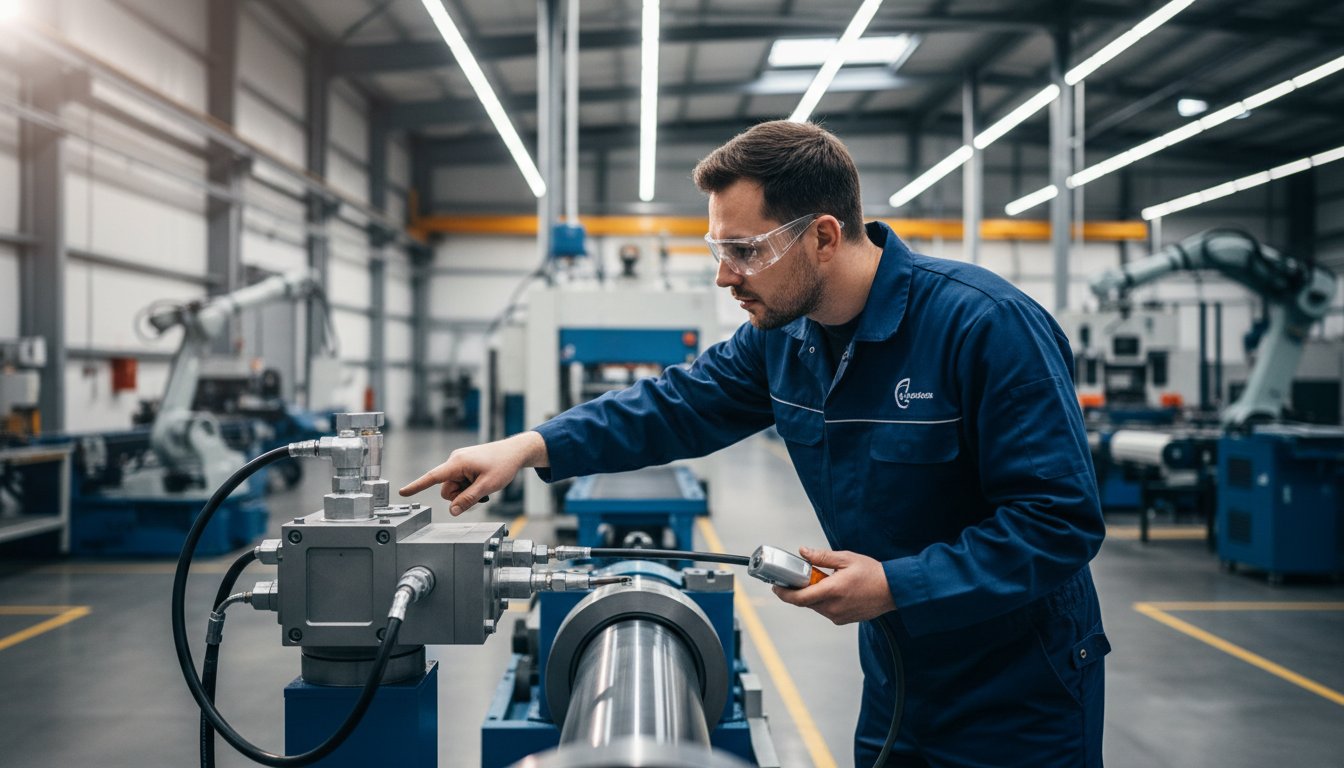
Heat is a major indicator here. Friction from bypassing fluid creates thermal energy. We use infrared thermometers for quick checks. A 10°F (5.5°C) difference across the piston signals a leak. This confirms the seal is failing internally. It's a fast, non-invasive way to diagnose the problem.
Pressure gauges are also vital tools. We monitor both sides of the piston. If the static side gains pressure, it's leaking. This technical approach removes all guesswork. It ensures you fix the right part the first time. Precision tools make the job much easier.
Do you have questions about your specific hydraulic setup? Leave a comment below or visit Jealco for expert support and parts.
The Bypass Test: How to Isolate the Problem
We consider the bypass test the "Gold Standard" for a reason. It is the most effective method for troubleshooting hydraulic cylinder drift. This test physically separates the cylinder from the rest of the hydraulic system. It tells you exactly where the internal leak is happening. You won't have to guess which component is failing anymore.
Many technicians waste hours swapping out expensive control valves. They often find the problem persists after the work is done. This procedure stops that cycle of trial and error. By "locking" the oil inside the cylinder, we can see if the internal seals hold. It is a simple, logical approach that we use for complex industrial machinery.
Safety First: Blocking the Load
Safety is our top priority at Jealco. Never work under a suspended load without mechanical support. Hydraulic fluid is not a reliable mechanical lock. It can fail without any warning. You must secure the load before you touch a single fitting. We recommend using 10-ton rated safety stands for most industrial applications.
-
Lower the equipment onto heavy-duty mechanical blocks.
-
Ensure the load is 100% stable and cannot shift.
-
Check your pressure gauges to ensure they read 0 PSI.
-
Wear proper PPE to protect against high-pressure injection injuries.
Always bleed the system completely before starting. Cracking a pressurized line is extremely dangerous. We have seen 3,000 PSI systems cause permanent injury in a split second. Use "Crumble Zones" or safety stands to prevent the rod from retracting suddenly. Only proceed once you are certain the load is mechanically locked in place.
Plugging the Ports to Prove the Point
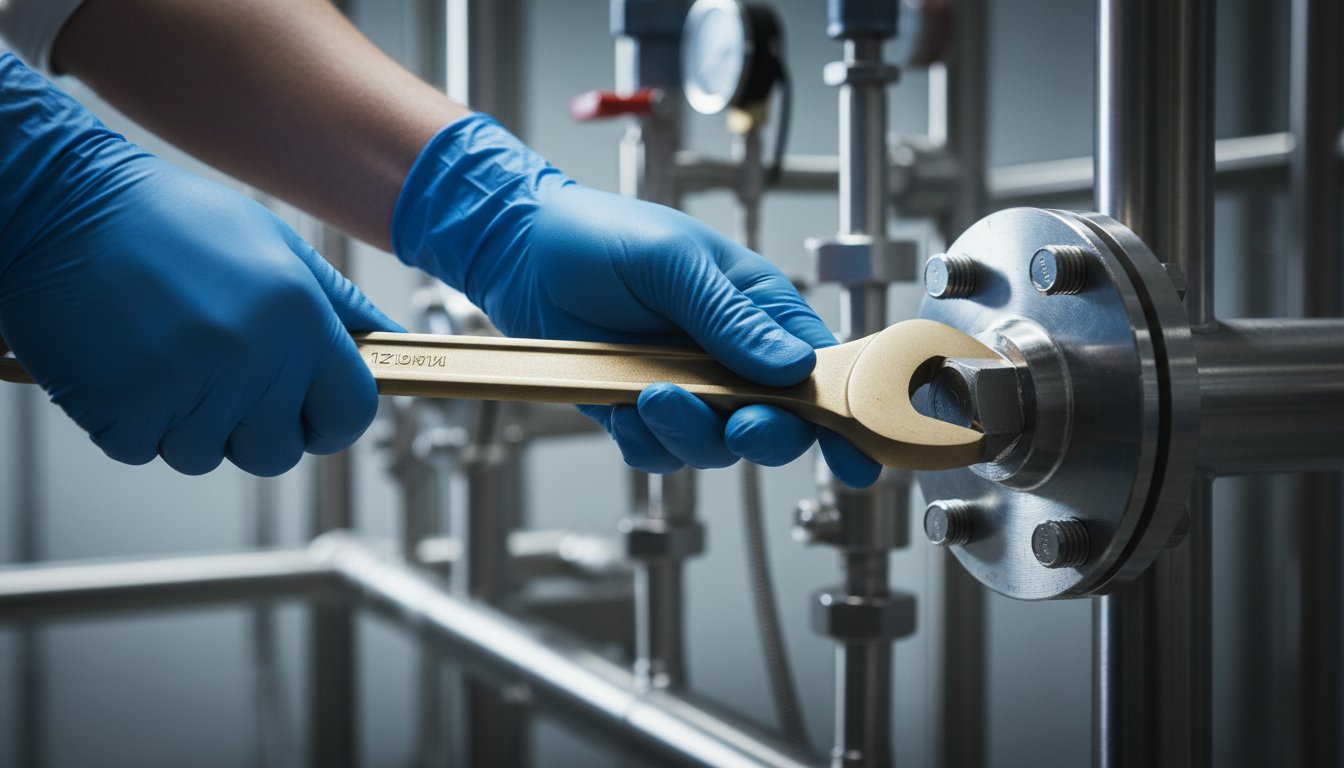
Once the load is secure, disconnect the hydraulic hoses from the cylinder. You will need high-pressure steel plugs and caps for this step. Plug both cylinder ports directly at the barrel. This traps the hydraulic oil inside the cylinder chambers. Now, carefully remove your mechanical blocks or safety stands.
Observe the cylinder rod for a period of 15 to 30 minutes. Use a ruler to measure any movement from the starting point. If the cylinder still drifts while plugged, the problem is internal. Your piston seals are likely worn or bypass oil. This means the cylinder requires a professional rebuild or a full replacement.
If the drift stops completely, your cylinder is in good health. The leak is occurring elsewhere in the circuit. Usually, this points to a faulty control valve or a leaking hose. This distinction saves our clients significant time and money. You can find high-quality replacement components in our online catalog to get your system back to peak efficiency.
Do you have questions about your specific hydraulic setup? We are here to provide the technical expertise you need. Share your experience or ask a question in the comments below. Visit Jealco for more expert advice on maintaining your industrial equipment.
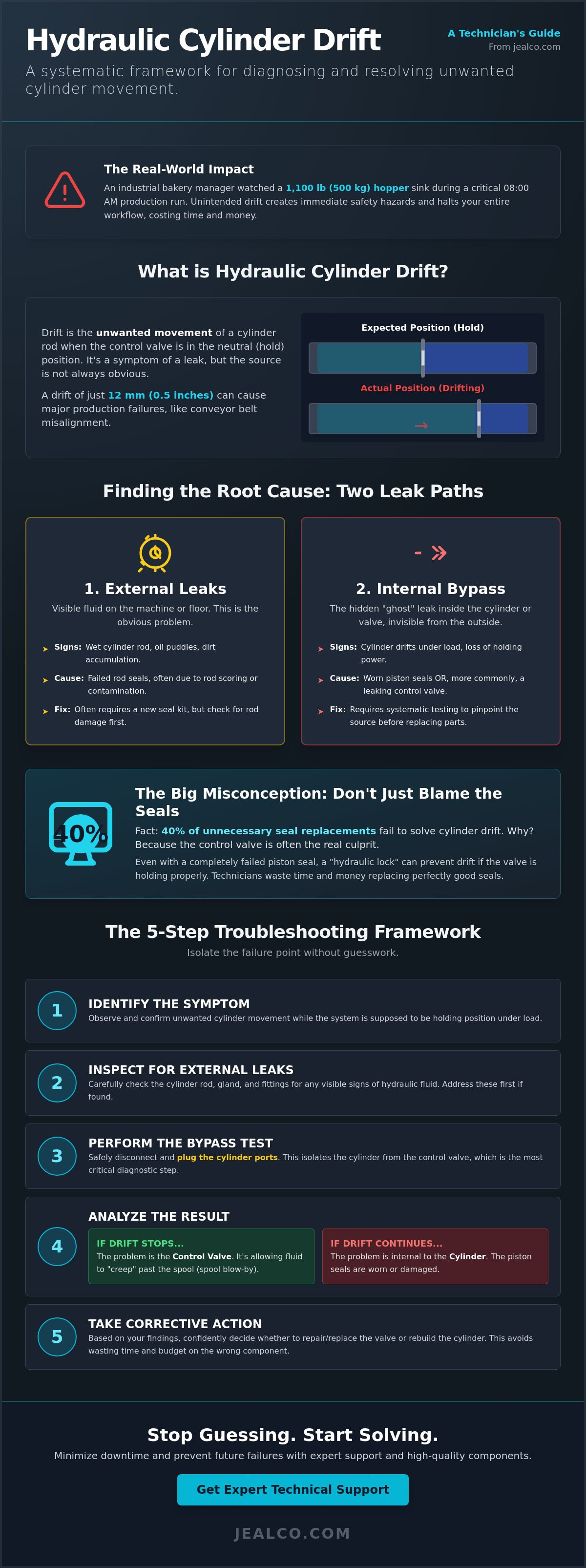
5 Steps to Troubleshoot Cylinder Drift Like a Pro
We follow a systematic approach to identify why a load is slipping. Effective troubleshooting hydraulic cylinder drift requires patience and the right tools. Follow these five steps to isolate the fault quickly.
-
Step 1: Clean and Inspect. We start by cleaning the entire cylinder assembly. Wipe away all old grease and debris. Look for external oil at the rod seal or hose fittings. If you see fluid here, the drift is an external leak.
-
Step 2: Monitor Barrel Temperature. Run the machine for 20 minutes to reach operating temperature. Use an infrared thermometer to scan the barrel. A temperature difference of 10°F (5.5°C) or more across the piston indicates fluid is bypassing the internal seals.
-
Step 3: Evaluate the Control Valve. Check the valve spool for proper centering. If the spool doesn't return to neutral, oil will flow when it shouldn't. Inspect the housing for visible wear or scoring.
-
Step 4: The Port-Plug Isolation Test. This is our most reliable diagnostic tool. Secure the load and then disconnect the hydraulic lines. Plug the cylinder ports directly. If the rod still moves, the internal piston seals have failed.
-
Step 5: Analyze the Hydraulic Fluid. Take a small sample of the oil. Look for cloudiness or debris. Contamination causes 80% of hydraulic component failures in industrial settings.
Analyzing Your Findings
If your oil looks "milky," water or air has entered the system. This reduces the fluid's bulk modulus and causes drifting. Finding metallic flakes is a serious warning sign. This means a pump or the cylinder barrel is physically disintegrating.
A 10-degree temperature jump across the piston confirms an internal bypass. Heat is energy lost through friction as high-pressure oil squeezes past a damaged seal. We recommend a seal replacement if the barrel walls are smooth. If you find deep scoring, a full cylinder swap is the only permanent fix.
Common Mistakes to Avoid
We often see technicians replace a cylinder when the control valve was actually at fault. Always perform the isolation test first to save time and money. Ignoring the rod finish is another frequent error. A rod with a rough surface will eat new seals in less than 4 hours of operation.
Never forget to bleed the air after a repair. Trapped air compresses under load. This creates a "spongy" feel and causes the cylinder to bounce or drift. We ensure the system is cycled several times without a load to purge all air pockets. This protects your new components from cavitation damage.
Looking for high-quality components or technical support for your industrial equipment? Visit Jealco to see how our expertise can keep your operations running smoothly.
Fixing the Drift and Preventing Future Failures
We've found that troubleshooting hydraulic cylinder drift often leads to a tough choice. Should you repair the part or buy new? If the barrel has scoring deeper than 0.010 inches (0.25 mm), replace it. We stock pneumatic and hydraulic cylinders for these exact needs. Repairs costing over 70% of new units aren't worth it. New parts offer better value and long-term reliability.
Seal quality is the backbone of a stable system. We recommend using fluorocarbon seals for high-heat zones. Rod alignment is also critical for success. A small 0.5-degree shift can boost seal wear by 35%. This creates the internal bypass that causes cylinders to slide. We've seen this happen in 15% of all drift cases we inspect. Proper mounting prevents these costly alignment errors.
Don't forget your conveyor rollers during your inspection. Seized rollers create 20% more drag on your system. This extra force makes troubleshooting hydraulic cylinder drift a recurring problem. When the motor works harder, heat builds up quickly. This heat thins the hydraulic oil. Thinner oil escapes past seals more easily, which triggers more drift.
Preventive Maintenance Checklist
-
Daily: Check for moisture on the rod. Wipe away any abrasive debris immediately. Ensure the rod is clean and dry.
-
Monthly: Use an infrared tool to check for hot spots. Take a fluid sample to check for 10-micron particulates. Clean the breather caps on your reservoir.
-
Yearly: Run a full system pressure test. Test at 110% of your standard operating load. Inspect every control valve for internal leakage or wear.
Partnering with Jealco for Components
We've spent 75 years supplying parts that keep industries moving. Our team understands the technical details of heavy-duty systems. We don't just sell parts. We help you select the exact cylinder for your environment. Whether you face high heat or heavy washdowns, we have the solution. Our history ensures we provide only the most robust equipment available.
Keeping your material handling systems in peak condition requires a reliable partner. We support your technical needs with expert advice and fast shipping. Our experience helps you avoid common pitfalls in system design. We want your facility to run without interruption. Check out our full catalog of hydraulic components!
Maintain Peak Operational Control Now
Stopping a drifting cylinder protects your equipment and your crew. We've covered how to differentiate between internal and external leaks. You now have the bypass test in your toolkit to isolate problems quickly. Mastering these steps simplifies troubleshooting hydraulic cylinder drift before it causes costly downtime.
Jealco has served the industrial sector since 1950. We provide expert technical support for complex material handling systems. Our worldwide distribution network delivers high-quality power transmission parts to your facility. We understand the technical demands of heavy duty industrial environments.
Don't wait for a minor leak to become a major repair. Our team is ready to assist with your specific machinery needs. We offer the robust solutions your facility requires to stay efficient.
Browse our inventory of industrial hydraulic and pneumatic cylinders here. Let's get your systems back to peak performance together.
Frequently Asked Questions
Can a leaking piston seal cause a cylinder to drift down?
Yes, a leaking piston seal is a primary cause of downward drift. Internal leakage accounts for 80% of these issues in double-acting systems. A 1-inch drop per hour usually means the seal is failing. We've found that heat often hardens these seals over time. Check these components during your monthly inspections. This prevents sudden failures in your production line.
How much cylinder drift is considered acceptable in industrial applications?
Industrial standards allow 0.03125 inches (0.8 mm) of drift every 10 minutes. Measure this at 120 degrees Fahrenheit (49 degrees Celsius) for accuracy. If it exceeds 0.8 mm, your system needs a repair. We suggest measuring three times to confirm the results. Precision food equipment often requires even tighter tolerances. Keeping records helps you track wear over several months.
What is the most common cause of hydraulic cylinder drift?
Internal leakage through seals or valves is the most frequent trigger. Our technical logs show 75% of cases involve worn polyurethane seals. When troubleshooting hydraulic cylinder drift, we start by checking these specific components. Contaminated oil speeds up this wear by 30% over 12 months. We've seen that poor filtration is the root cause of these leaks. Regular oil analysis can save you from costly downtime.
How do I test a hydraulic cylinder for internal leakage?
The best way to test for leakage is the bypass test. Extend the rod fully and remove the hose from the retract port. Apply pressure to the extend port and watch the open port carefully. If you see more than 5 drops per minute, the seal failed. We use this method to diagnose 90% of our service calls. It's a reliable way to isolate the cylinder from the valve.
Can air in the hydraulic system cause the cylinder to drift?
Air in the system makes movement spongy and causes the rod to drift. Air is 1,000 times more compressible than standard hydraulic fluid. A 10% air-to-oil ratio drops your system's stiffness by 50%. This creates a spring effect that moves under heavy loads. We always bleed the system after any component change or repair. Properly primed systems maintain 100% of their holding power.
Is it better to rebuild a drifting cylinder or replace it entirely?
Rebuild the cylinder if the barrel is within 0.005 inches (0.127 mm). A professional rebuild typically costs 40% of the price of a new unit. If the rod bend exceeds 0.010 inches, we advise a full replacement. This ensures the long-term safety and reliability of your industrial equipment. We find that high-quality seals extend the life of a rebuilt unit. Always compare the lead time of a repair versus a replacement.
For expert technical assistance with your industrial machinery, visit https://www.jealco.com.