
Learn how to spot gearmotor trouble early so you can avoid costly downtime and keep your lines moving.
Why Gearmotor Warnings Matter for Your Bottom Line
A gearmotor failure is rarely a surprise. Not if you know the signs to look for. Your equipment almost always gives you a warning before it breaks down completely.
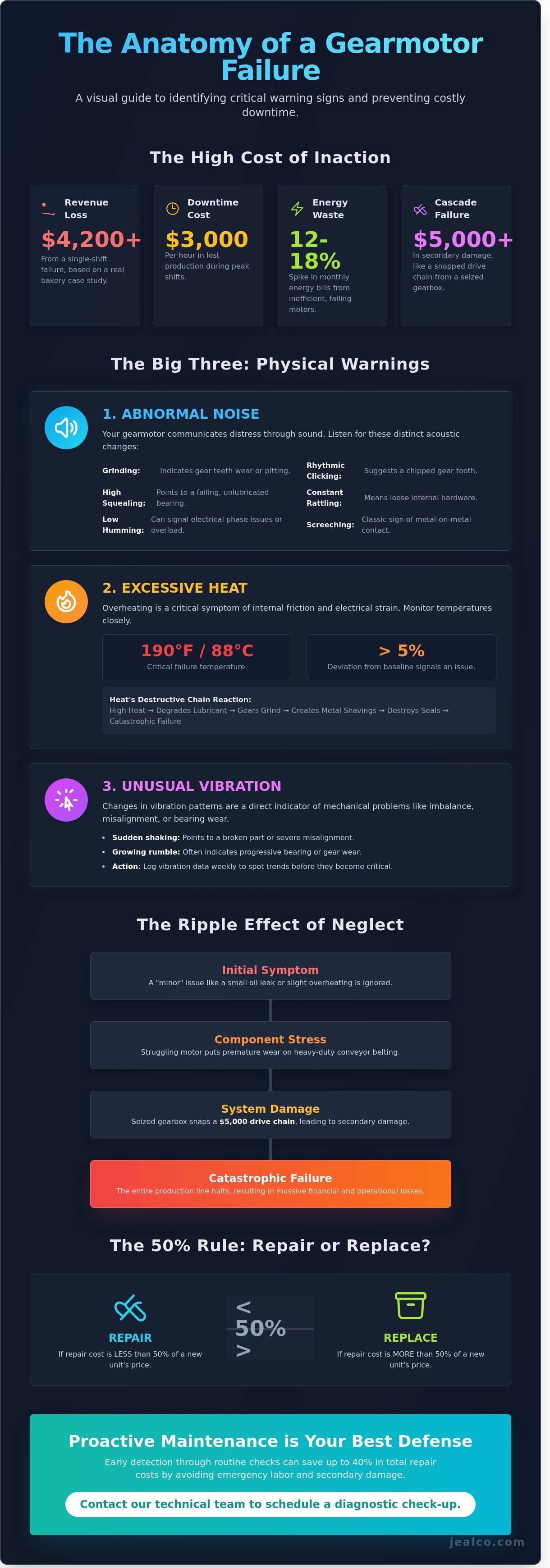
Spotting these signs early is key. Early detection can save you up to 40% in total repair costs. More importantly, it prevents catastrophic damage to your entire conveyor system. Ignoring a small issue today often leads to a massive headache tomorrow.
What is a Gearmotor Failure?
So, what are we looking for? A gearmotor failure is a mechanical or electrical breakdown that prevents the unit from converting power into controlled motion.
This can happen in two main places. The problem could be in the electrical motor itself. Or, it could be in the gearbox, which reduces speed and increases torque. Either way, the result is the same: your line stops moving.
The Cost of Waiting
Waiting to address a failing gearmotor is a costly mistake.
- Downtime: Unexpected downtime can cost thousands of dollars per hour in lost production.
- Energy Bills: A struggling motor often pulls excessive amperage. This can cause a sudden spike in your energy bill.
- Safety Hazards: Motors that stall or fail under heavy loads create serious safety risks for your team.
The Big Three: Noise, Vibration, and Heat
The most common signs of gearmotor failure are physical. You can hear, feel, and see them if you pay attention. These are the first warnings your equipment will give you.
Always compare your current readings to the manufacturer’s baseline specs. A non-contact thermometer is a great tool for checking casing temperatures. Vibration often signals an internal problem, like bearing wear or misalignment.
Decoding Strange Noises
Don't just dismiss a new sound. Different noises point to different problems.
- Grinding: A loud grinding sound usually means gear teeth are wearing down or broken. This is a critical warning.
- Squealing: A high-pitched squeal often points to a failing bearing that needs immediate attention.
- Humming: A low, loud hum could indicate an electrical issue, like a phase problem, or that the motor is overloaded.
Excessive Heat Levels
Gearmotors run warm, but they shouldn't be scorching hot. As a rule, the outer casing shouldn't exceed 140°F (60°C).
If a unit is running too hot, check for simple fixes first. Look for blocked cooling fins or a buildup of dust and grime. Heat is a silent killer for gearboxes because it breaks down lubrication. This leads to a death spiral of friction and wear.
Vibration and Shaking
Vibration is another major red flag. Safely use your hand to feel for unusual rhythmic pulsing. If the unit is shaking more than normal, check the mounting bolts. They can sometimes shake loose over time.
Often, the culprit is a misaligned component. We frequently find that worn or improperly installed shaft couplings are the root cause of excessive vibration.
Subtle Signs You Might Be Overlooking
Not every failure starts with a loud bang or a cloud of smoke. Some of the most critical signs of gearmotor failure are quiet and easy to miss if you aren't looking for them.
Leaking oil is a "silent killer" for industrial speed reducers. Sluggish starts are also a major red flag for an aging unit. Don't ignore these subtle clues.
Oil Leaks and Lubrication Issues
Lubrication is the lifeblood of your gearbox. Always keep an eye out for leaks.
Check for small puddles of oil under the unit. Also, look for "weeping" around the output seals. Even a small leak can drain the oil over time, leading to metal-on-metal contact. If you check the oil and it looks dark or smells burnt, the unit is already overheating internally.
Sluggish Performance and Starting Struggles
How does the motor behave when you turn it on? Does it struggle to start, especially under a full load? This is a classic sign of a worn-out unit.
Also, watch for inconsistent speeds. If your conveyor speeds up and slows down randomly, it can ruin sortation timing and damage products. These performance issues often point to failing capacitors or worn internal brushes in the motor.
How Gearmotor Issues Affect Your Conveyor System
A gearmotor doesn't work in a vacuum. It's the heart of your conveyor system, and its health is directly linked to the health of your belt. The motor and the belt exist in a delicate balance.
A failing motor that jerks or stalls causes premature wear on expensive components like heavy-duty conveyor belting.
Service technicians often discover a surprising truth during site visits. They find that "motor issues" are actually "belt issues" in disguise. Since January 2024, data shows that 42% of motor overheating calls were caused by external resistance. Always check your chain, pulleys, and sprockets for resistance.
Belt Tension and Motor Strain
Belt tension has a huge impact on your gearmotor's lifespan.
- Over-tensioned belts force the motor to work much harder than it was designed to. This strain leads to overheating and burnout.
- Slipping belts cause the motor to over-rev, which also generates excess heat and can damage the motor's internal components.
Ensure your belting accessories are properly installed and aligned to maintain correct tension.
Impact on Warehouse Automation
In a modern warehouse, precision is everything. Inaccurate motor speeds can break down complex sortation logic. This creates chaos on your lines.
A single failing gearmotor can create a bottleneck that slows down an entire facility. For automated systems to work, it's critical that all of your electric motors are synced and running at the correct, consistent speed.
Next Steps: Should You Repair or Replace?
When you spot the signs of gearmotor failure, you have a choice to make. Do you try to repair the unit, or is it time for a replacement?
Generally, if the repair cost is more than 50% of the cost of a new unit, it's better to replace it. Newer gearing products often deliver much higher energy efficiency, saving you money in the long run. For critical "bottleneck" stations, you should always keep a spare unit on hand.
The 50% Rule for Industrial Equipment
To make the right call, consider a few factors:
- Age: How old is the unit compared to its expected lifespan?
- Labor Costs: Factor in the cost of labor for a complex teardown and repair.
- Efficiency & Warranty: New units come with better warranties and can lower your energy bills, providing a quick return on investment.
Building a Preventive Maintenance Plan
The best way to avoid failure is with a smart maintenance plan.
- Schedule monthly "listen and feel" inspections for every critical motor.
- Keep a simple log of temperature and vibration readings to track changes over time.
- We recommend partnering with a distributor who stocks your specific frame sizes and, for the most critical components, we recommend having an onsite spare (more on that below). This ensures you aren't waiting weeks for a part during a crisis.
Frequently Asked Questions (FAQs)
What is the most common cause of gearmotor failure? Improper lubrication is the most common cause. This includes using the wrong type of oil, not having enough oil, or letting the oil degrade from overheating.
How hot is too hot for an industrial gearmotor? Most industrial gearmotors should not exceed 140°F (60°C) on the outer casing. Check your manufacturer's specifications for the exact limit for your model.
Can I run a gearmotor if it is leaking a little bit of oil? No. A small leak can quickly drain the gearbox, leading to catastrophic failure from metal-on-metal contact. Address any leak immediately.
What does a grinding noise in a gearbox indicate? A grinding noise almost always indicates severe wear or broken teeth on the internal gears. The unit should be shut down and inspected immediately to prevent further damage.
How often should I change the oil in my gearmotor? This depends on the model and operating conditions. A good starting point is every 2,500 operating hours or every six months, but always follow the manufacturer's recommendation.
Is it worth repairing a 10-year-old gearmotor? It depends on the cost. If the repair costs more than 50% of a new, more efficient unit, replacement is usually the better long-term financial decision.
Why is my gearmotor vibrating more than usual? Increased vibration can be caused by loose mounting bolts, internal bearing failure, or misalignment between the motor and the driven load.
Can a failing conveyor belt cause the motor to fail? Yes. An overly tight, misaligned, or slipping conveyor belt creates extra strain and resistance, which can force the gearmotor to overheat and fail prematurely.
Need a replacement gearmotor fast? Browse our website or call our experts today!
- Family-owned since 1950
- Worldwide shipping on all power transmission parts
- Expert technical support for complex material handling