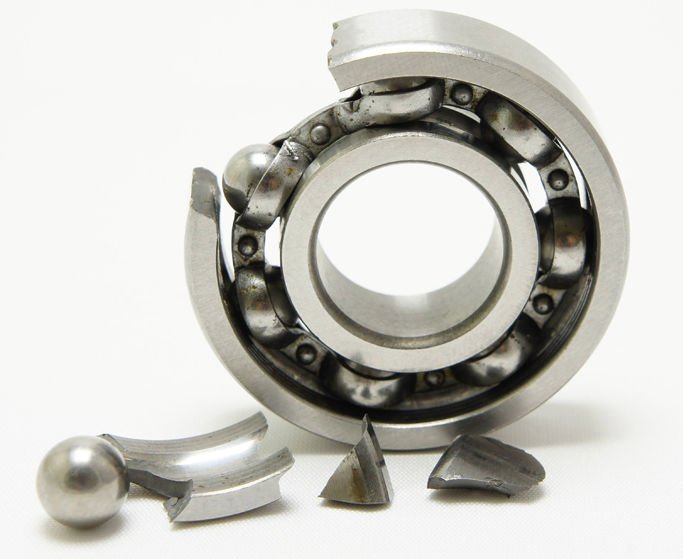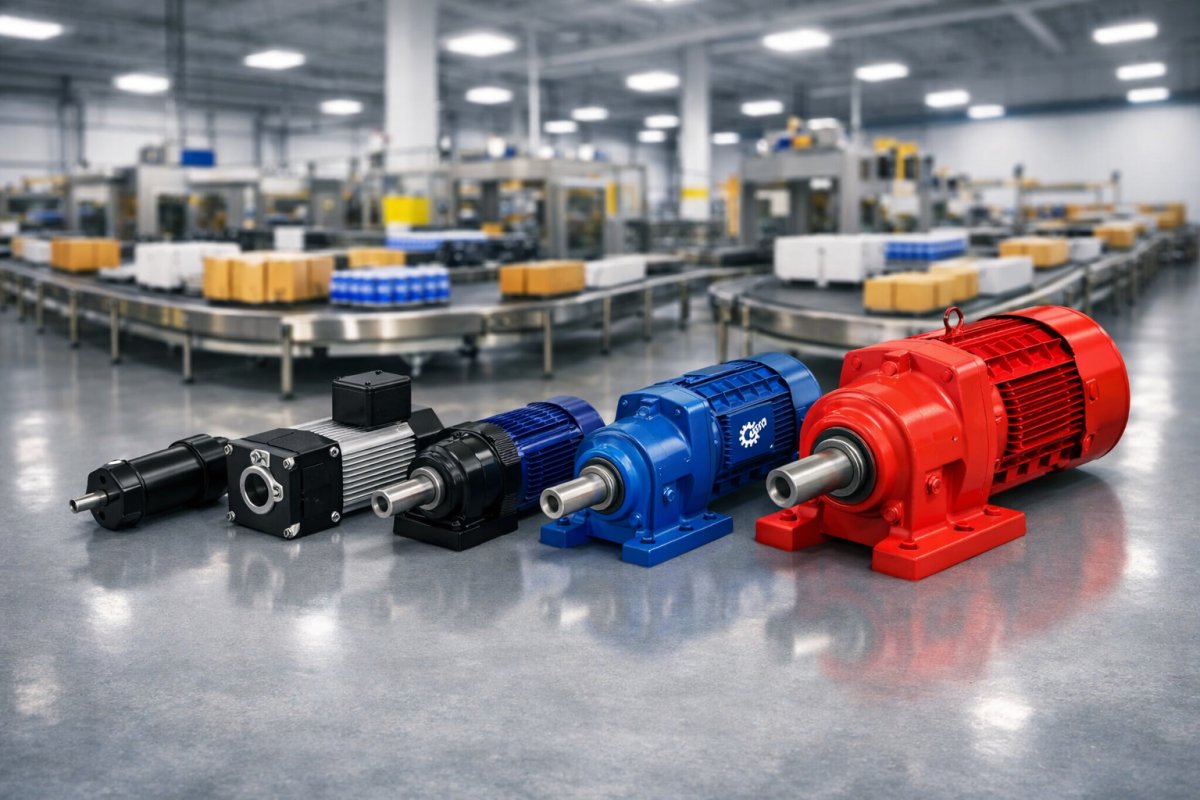
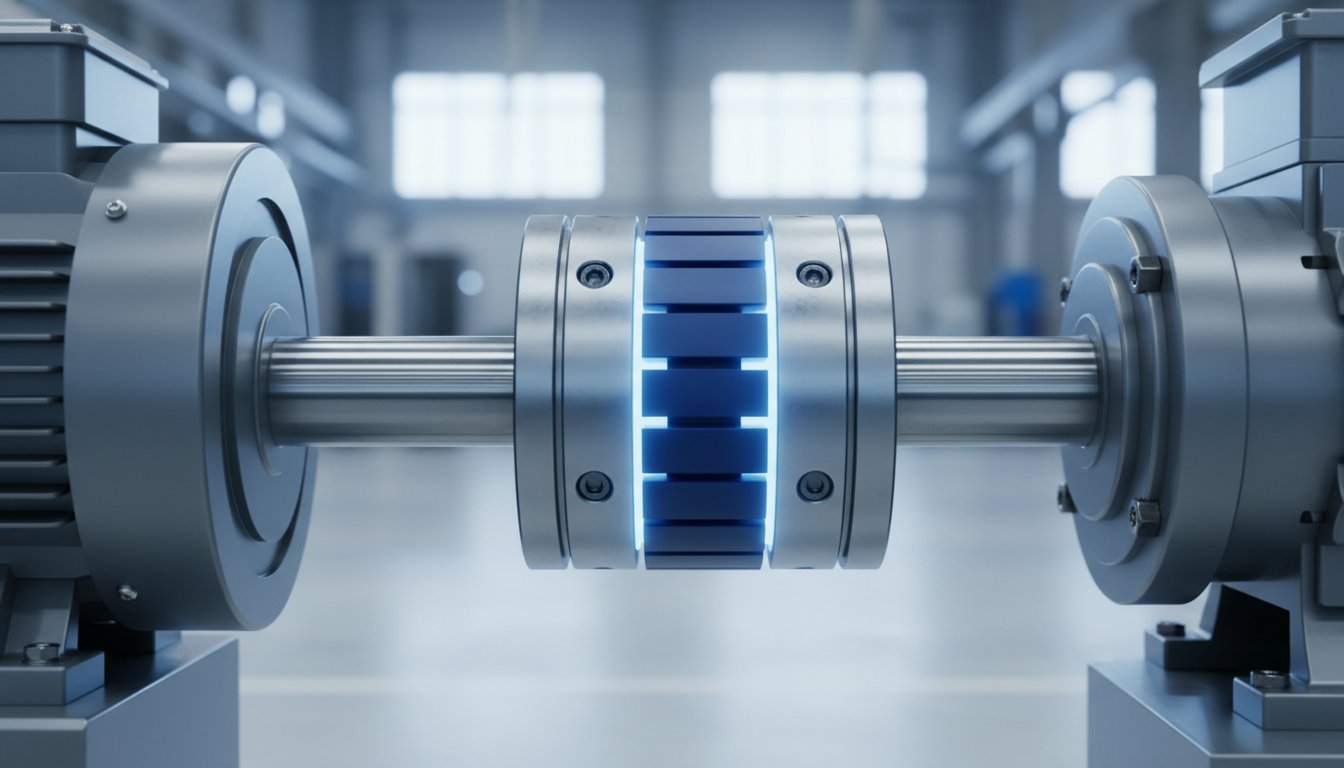
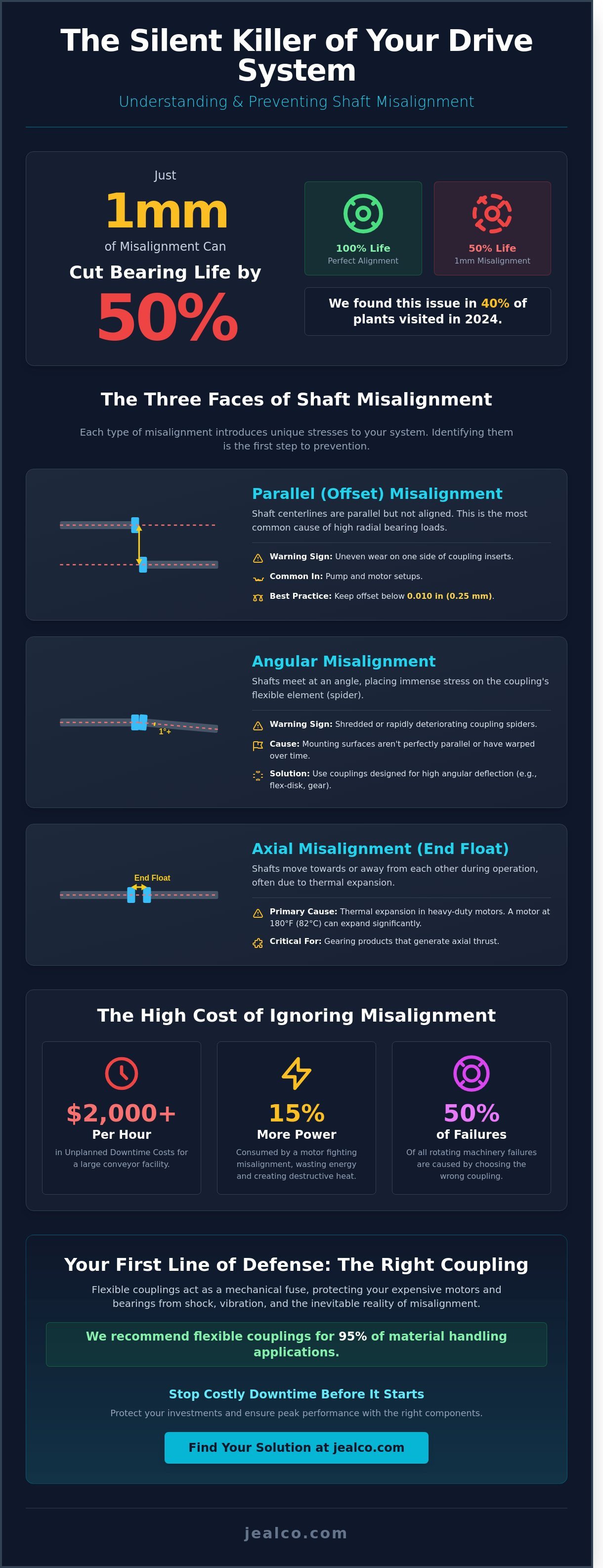
One millimeter of misalignment can cut bearing life by 50%. We saw this in many of plants visited previously. It's a silent killer for your industrial machinery. Selecting the correct shaft coupling for misalignment stops this damage. You're likely tired of frequent downtime and expensive bearing replacements.
Deciphering technical specs shouldn't feel like a chore. This 2026 guide makes the selection process simple and predictable. We'll show you how to protect your motors right now. You can extend your machine life with the right choices.
You'll learn to identify the exact coupling for your torque needs. We'll use a clear, three step process for your hardware. We'll also cover how to avoid common mistakes. These errors often lead to total system failure. Our team has refined these methods over 30 years of service. We want your facility to run at peak performance. Let's dive into the details that matter for your bottom line.
Key Takeaways
-
See how a poor coupling choice destroys expensive motor bearings.
-
Identify angular, parallel, and axial misalignment before they cause failure.
-
Master selecting the correct shaft coupling for misalignment using our technical comparison.
-
Follow our 5-step checklist to calculate torque and RPM accurately.
-
Use our 70 years of experience to stop costly system downtime.
Table of Contents
Why Shaft Misalignment is the Silent Killer of Your Drive System
We see it every day. A high-performance motor worth thousands of dollars gets ruined. The culprit is often a simple $50 component. Choosing the wrong connection point causes 50% of all rotating machinery failures. Misalignment creates parasitic loads. These forces eat through industrial bearings in record time.
Before diving into technical specs, you must understand what are shaft couplings and why they matter. These devices connect two shafts to transmit power. When they aren't aligned, the system fights itself. Heat, vibration, and noise are your first warning signs. Don't ignore them. Even a "perfect" setup won't stay that way forever.
Thermal expansion or foundation settling can shift components by 0.5mm or more. This happens even in the most stable environments. Metal expands when it gets hot. Foundations settle over years of operation. These tiny shifts create massive stress on your equipment. Selecting the correct shaft coupling for misalignment is the only way to prevent total system failure.
The Real Cost of Ignoring Proper Coupling Selection
Unplanned downtime is a financial disaster. In a large conveyor facility, costs often exceed $2,000 per hour. Selecting the correct shaft coupling for misalignment prevents these sudden stops. It keeps your production lines moving. Premature wear on electric motors leads to expensive core replacements. These costs add up quickly.
Energy efficiency also takes a major hit. Your motor consumes up to 15% more power when fighting its own shaft. This wasted energy turns into heat. Heat destroys seals and lubricants. We've found that proper alignment saves companies thousands in annual utility bills. It's not just about repair costs. It's about long-term operational health.
Flexible vs. Rigid: Why One Size Never Fits All
Rigid couplings offer zero forgiveness. They provide maximum torque transmission. However, they require perfect alignment. We rarely see this in real-world food processing or material handling environments. One slight bump can snap a shaft. These are best for very specific, high-precision laboratory setups.
Flexible couplings act as a mechanical fuse. They protect expensive components from shock and vibration. We recommend flexible options for 95% of material handling applications. They handle angular, parallel, and axial offsets. This flexibility keeps your bearings cool and your motors running. It's a small investment that provides massive peace of mind.
Do you have questions about your current drive system? We can help you identify the best components for your specific needs. Visit us at https://www.jealco.com to learn more about our technical solutions.
Identifying the Three Faces of Shaft Misalignment
Misalignment is the deviation between the intended and actual positions of two connected shafts. We operate on a simple principle: you cannot fix what you cannot measure. Precision is the backbone of industrial reliability. We utilize both imperial (inches) and metric (mm) measurements to ensure every installation meets exact tolerances. Selecting the correct shaft coupling for misalignment starts with a forensic look at how your shafts are actually sitting in the field.
Each type of misalignment demands a specific mechanical response. If you choose a coupling that is too rigid for the specific error present, you will transfer that stress directly into your bearings. This leads to premature equipment failure and costly downtime. We've seen 0.015-inch (0.38 mm) errors destroy standard bearings in less than a month of continuous operation.
Parallel (Offset) Misalignment
In this scenario, the shafts are parallel but their centers don't line up. It's the most common cause of high radial bearing load. We often find this in pump and motor setups. You should look for uneven wear on one side of your coupling inserts or spiders. This indicates the shafts are trying to push away from each other. We recommend keeping offset below 0.010 inches (0.25 mm) whenever possible to maximize component life.
Angular Misalignment
Angular misalignment occurs when shafts meet at an angle rather than a straight line. This puts immense stress on the coupling’s flexible element or spider. It's frequently found in systems where mounting surfaces aren't perfectly machined or have warped over time. When comparing coupling types, we prioritize flex-disk or gear couplings for these environments. Even a 1-degree angle can cause a spider to shred if the material isn't rated for that specific deflection.
Axial Misalignment (End Float)
Axial movement happens when shafts move toward or away from each other during operation. This is a critical factor for gearing products that generate axial thrust. Thermal expansion is the primary driver of this movement in heavy-duty motors. A motor running at 180 degrees Fahrenheit (82 degrees Celsius) can expand significantly. We must select a coupling that allows for this "end float" without putting pressure on the motor's internal thrust bearings.
Selecting the correct shaft coupling for misalignment requires balancing these three factors simultaneously. Most real-world applications feature a combination of all three. We've found that regular laser alignment checks can reduce energy consumption by 5% or more. If you're unsure which hardware fits your specific torque and gap requirements, you can browse our full range at Jealco for professional-grade solutions.
Comparing Coupling Types: Which One Flexes for You?
Choosing a coupling involves a delicate balancing act. We evaluate every design based on two main factors. These are torsional stiffness and damping. Torsional stiffness measures how much the coupling resists twisting under a load. Damping determines how well the component absorbs system vibrations. Selecting the correct shaft coupling for misalignment requires a deep understanding of these forces. If you pick the wrong type, you won't just fail to fix the issue. You might actually amplify vibrations by 20% or more. This leads to premature bearing failure and unplanned downtime. We've seen machines shake themselves apart because of a mismatched coupling choice.
Precision matters in industrial settings. Reuland couplings are engineered for specific industrial tolerances that many generic brands miss. They can often handle up to 0.5mm (0.020 inches) of parallel offset while maintaining torque integrity. I always tell my clients that a coupling is a fuse for your machine. You want it to handle the stress so your motor doesn't have to.
Jaw Couplings: The Economical Workhorse
Jaw couplings are our top recommendation for simple, everyday setups. They use a flexible insert called a "spider" made from urethane or NBR. These spiders come in different hardness levels to match your damping needs. They work best for light to medium loads and can handle angular misalignment up to 1 degree. We love the fail-safe design. If the spider fails, the metal jaws lock together. Power keeps flowing, which prevents an immediate total shutdown. It's a rugged solution for non-critical paths.
Gear and Grid Couplings: For Heavy-Duty Torque
When torque requirements exceed 500 Nm, we look at gear and grid designs. Gear couplings pack the most power into the smallest physical footprint. They are perfect for tight spaces. Grid couplings are different. They excel at absorbing shock loads in conveyor systems by using a spring-like grid element. Both types require a strict maintenance schedule. You must apply grease regularly. Without lubrication, you'll see metal-on-metal wear within 500 operating hours. Selecting the correct shaft coupling for misalignment in heavy industry often means committing to this maintenance.
Disc and Elastomeric Couplings
High-speed precision requires disc couplings. These use thin stainless steel discs to transmit torque. They offer zero backlash and high torsional stiffness. If your application involves high RPMs or exact positioning, this is your best bet. Elastomeric designs offer a different benefit. They are completely lubrication-free. This makes them ideal for clean environments like food processing or pharmaceutical labs. We suggest these for areas where reaching a grease nipple is difficult or dangerous for your staff.
Do you have questions about which coupling fits your specific motor? Reach out to us for a technical consultation. Visit us at https://www.jealco.com to see our full range of industrial solutions.
A 5-Step Checklist for Selecting Your Perfect Coupling
Choosing the right hardware isn't a guessing game. It's a technical calculation. We've seen many systems fail because a small detail was missed. Follow this checklist for selecting the correct shaft coupling for misalignment to keep your production floor running smoothly.
-
Step 1: Calculate your required torque. Don't just look at the motor rating. You must include service factors to handle peak loads and startups.
-
Step 2: Determine your maximum operating RPM. High speeds can cause vibration. We ensure every coupling is balanced for its specific operating speed.
-
Step 3: Measure your actual misalignment. Check for angular, parallel, and axial movement. Use a dial indicator for 100% accuracy. You must also account for thermal expansion. Machines grow when they get hot. A coupling that fits perfectly at 70°F (21°C) might fail at 160°F (71°C).
-
Step 4: Check space and shaft diameters. Measure your shafts in both inches and millimeters. Verify the "pull-off" space needed for maintenance. We often see technicians forget they need room to slide the coupling back for inspection.
-
Step 5: Account for environmental factors. Consider heat, moisture, and chemical exposure. These factors dictate your material choice and long term durability.
Understanding Service Factors
Service factors protect your equipment from unexpected stress. A motor starting 20 times an hour needs a higher factor than a motor running 24/7. We typically add 1.5x to 2.0x torque capacity for conveyor applications. This buffer handles the shock loads from heavy-duty conveyor belting startups. If you ignore these surges, you'll face premature fatigue. We've found that a 25% increase in service factor can double coupling life in high-cycle environments. If your motor is 10 HP at 1750 RPM, your base torque is about 30 lb-ft. With a 2.0 service factor, you need a coupling rated for 60 lb-ft.
Environmental and Chemical Considerations
Your environment dictates your material. Will the coupling face wash-down chemicals or extreme heat? Urethane spiders are popular but they degrade in certain oils. Always check your material compatibility charts before buying. Stainless steel options are a must for food-grade sortation systems. We recommend 303 or 316 stainless for any area requiring frequent sanitation. High temperatures above 200°F (93°C) often require metallic grid or gear couplings. These handle heat better than elastomeric types. We've seen standard rubber components fail in just 48 hours when exposed to industrial degreasers.
Ready to optimize your drive system? Explore our full range of Reuland couplings to find your perfect technical match.
Why Jealco is Your Strategic Partner for Power Transmission
Jealco isn't just a parts distributor. We act as your strategic partner. Our family-owned business started in 1950. For over 74 years, we've mastered power transmission. We don't just ship boxes. We provide engineered solutions tailored to your facility. Our team solves complex mechanical issues daily.
Selecting the correct shaft coupling for misalignment is a technical challenge. It requires looking at the whole system. Our staff has 100 years of combined experience. We handle everything from standard drives to custom builds. This expertise ensures your machinery runs perfectly. We provide the following benefits:
-
Engineered Precision: We analyze torque, RPM, and service factors.
-
Massive Inventory: We stock thousands of shaft couplings for immediate shipping.
-
Load Calculations: Our technical team helps you calculate specific load requirements.
-
Proven Reliability: We've supported industrial operations since the mid-20th century.
Most orders ship immediately to minimize your downtime. We use precise formulas to find the right fit. This removes the guesswork from your maintenance routine. We prioritize your operational success over simple sales, and for those who demand the same level of precision in their personal vehicles, you can explore Superlite motorcycle sprocket and chain kits to find high-performance drivetrain components.
The Jealco Advantage: Beyond the Catalog
We look past the individual part. Our experts understand the relationship between components. We know how couplings interact with belt conveyors and precision rollers. A poor choice leads to bearing failure. This happens in 30 percent of industrial cases. We prevent these costly mistakes.
Our global reach means we support facilities worldwide. We ship to diverse locations quickly. We never recommend "cheap" hardware. Low-cost couplings often lack necessary tolerances. They fail early and cause damage. We focus on durability and long-term reliability. Our components are built for harsh environments. We value your long-term success.
Ready to Upgrade Your Drive System?
Your facility depends on consistent uptime. A single failed coupling can stop everything. One failure can cost 50,000 dollars per hour in lost production. Don't let a small part become a big problem. Selecting the correct shaft coupling for misalignment saves money. It reduces energy consumption by up to 5 percent. It also lowers your total cost of ownership.
We invite you to talk to us today. Our technical consultations are thorough. We'll review your project specs from every angle. We help you choose the best technology for 2026. Our commitment to quality is unwavering. Let's build a more reliable system together.
Reach out to our experts at Jealco for your coupling needs!
Secure Your Drive System for 2026 and Beyond
Shaft misalignment causes 50% of industrial machine failures. We've shown you how to identify angular and parallel issues before production stops. You now have a clear 5-step checklist for your facility. Selecting the correct shaft coupling for misalignment prevents costly downtime and protects your motors. We've provided these expert technical solutions since 1950. This experience ensures your equipment operates at peak performance.
We're an authorized distributor for world-class brands like Reuland. Our team manages global shipping for all material handling components you need. We focus on the robustness and functionality of every part we supply. You can rely on our deep specialized knowledge for your power transmission needs. We offer the technical precision that modern industrial processes demand. Our solutions help you maintain high energy efficiency.
Browse our full catalog of industrial couplings and power transmission parts!
We're ready to support your next project with precision and care. Let's build a more reliable system together.
Frequently Asked Questions
Can I use a rigid coupling if my shafts are perfectly aligned?
Yes, you can use a rigid coupling if your shafts maintain a tolerance within 0.001 inches. We often see these in high-precision food processing lines where 100% torque transfer is vital. However, even a 10-degree temperature shift causes thermal expansion in metal shafts. This expansion creates stress that ruins bearings quickly because rigid designs don't allow for any deviation.
How much misalignment can a standard jaw coupling handle?
A standard jaw coupling typically handles up to 1 degree of angular misalignment. It also manages parallel offsets up to 0.015 inches (0.38 mm). Selecting the correct shaft coupling for misalignment depends on these specific tolerances. If your motor exceeds these limits, the spider insert will fail within 500 operating hours. We recommend checking your laser alignment readings before installation.
What happens if I exceed the torque rating of my flexible coupling?
Exceeding the torque rating causes immediate mechanical fatigue or catastrophic shearing of the coupling keyway. In 90% of cases, the flexible element, like a rubber tire or plastic sleeve, will tear apart first. This protects your expensive motor but stops your production line instantly. Always apply a 1.5 service factor to your peak torque calculations to avoid this.
How often should I inspect my shaft couplings for wear?
We recommend inspecting your couplings every 2,000 operating hours or every 6 months. High-vibration environments, like industrial mixers, require a tighter 3-month schedule. Look for 1mm of spider wear or any visible hairline cracks in the metal hubs. Regular checks prevent 75% of unexpected drivetrain failures in industrial plants. When maintenance reveals significant wear, you can check out Kelsey Machine Services for professional repair and refurbishment of your heavy industrial rotating equipment.
Is it better to have angular or parallel misalignment?
Angular misalignment is generally easier for a flexible coupling to manage than parallel misalignment. Parallel offset forces the coupling to flex twice per revolution, which increases internal heat by 20%. Most gear couplings handle 1.5 degrees of angular movement but only 0.010 inches of parallel offset. Keeping parallel misalignment below 0.005 inches extends the life of your seals.
Can a coupling help reduce motor noise and vibration?
Yes, elastomeric couplings can reduce transmitted vibration by up to 50% compared to rigid shafts. This dampening effect lowers the decibel level of your motor by 3 to 5 points. We use these in bakery environments to protect sensitive electronic sensors from constant humming. Selecting the correct shaft coupling for misalignment ensures a quieter, more stable production floor.
What is the difference between a Type 1 and Type 2 coupling in industrial use?
Type 1 couplings feature a standard close-coupled design for shafts that are near each other. Type 2 couplings include a center spacer, often 3 to 5 inches long, to bridge larger gaps. This spacer allows Type 2 units to handle 2x more parallel misalignment than Type 1 models. Choose Type 2 if you need to perform pump maintenance without moving the motor.
How do I know if my coupling needs lubrication?
You'll know a gear or grid coupling needs grease when you see metal shavings or hear a high-pitched grinding sound. These metallic types require fresh NGLI #2 grease every 6 to 12 months. If you use a jaw or tire coupling, they're "lubricated for life" and require zero oil. Check your maintenance log for the last service date to avoid 15% efficiency losses.
Need expert help with your industrial machinery? Contact us today at https://www.jealco.com for professional support and technical solutions.