Big manufacturers in the $4.65 billion conveyor market often ignore your needs. If you've called a giant for one belt, you've hit a wall. Finding a custom conveyor belting supplier who answers the phone shouldn't feel like a miracle. We know it's frustrating when production stops because a standard belt failed.
You probably feel like your custom request is just a number. We'll show you how to source belts meeting the February 2026 ISO standards. You can get a belt that lasts longer without shipping headaches. We handle the complex customs paperwork and brand restrictions for you.
We'll explore how independent sourcing finds the exact match for your machine. Whether you need a 24-inch (610 mm) belt or a specialized width, we can find it. From AI sensors to sustainable materials, flexibility is your biggest advantage this year.
Key Takeaways
- Learn why off-the-shelf belts often fail under extreme heat and how custom materials can significantly extend your equipment's lifespan.
- Discover how working with an independent custom conveyor belting supplier gives you access to thousands of brands without restrictive corporate minimums.
- Explore technical fabrication options like cleats and flights that improve material handling efficiency on steep inclines.
- Master the logistics of international shipping, including how we manage complex customs paperwork for heavy loads over 500 lbs (226 kg).
- Understand the benefits of a consultative sourcing model that prioritizes your specific machine's performance over factory sales quotas.
Why Standard Conveyor Belts Often Fall Short
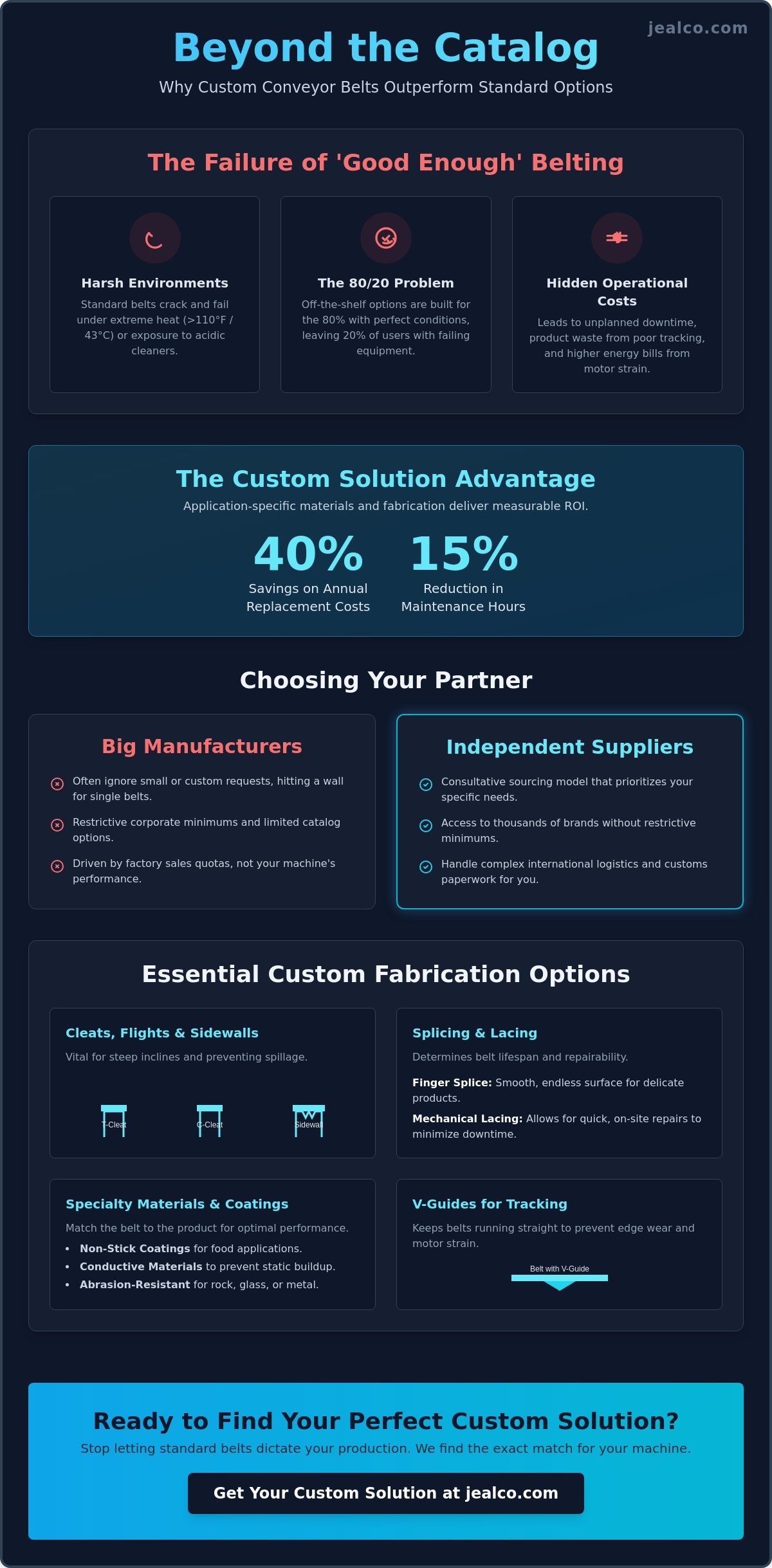
Most industrial catalogs assume your facility is a climate-controlled environment. They design for "average" humidity and room temperature. If your floor hits 110°F (43°C) or handles acidic cleaners, those standard belts will crack within months. We've seen production lines stop because a buyer chose a catalog part over a custom solution. These off-the-shelf options are built for the 80% of users who have perfect conditions. If you're in the other 20%, you're essentially trying to fit a square peg in a round hole.
A basic conveyor belt is simple in theory, but the material chemistry is what dictates its lifespan. Standard rubber compounds, which make up 52% of the market in 2026, often fail under extreme heat or chemical exposure. As an independent custom conveyor belting supplier, we help clients save up to 40% on annual replacement costs. We do this by meeting the February 2026 ISO 14890 standards with application-specific materials. We don't just sell you what's in stock; we find the material that fits your specific thermal and chemical load.
The Hidden Costs of 'Good Enough' Belting
Premature wear leads to unplanned downtime. If a belt snaps on a Tuesday morning, you lose hours of labor and revenue. Poor tracking is another silent killer. It ruins product quality and increases waste by dumping materials off the side of the line. You also pay more for electricity every month. Inefficient belt-to-pulley contact forces your electric motors to work harder. This increases energy consumption and puts unnecessary strain on your gearing products, leading to a cascade of mechanical failures.
When to Move Beyond the Catalog
You need a custom solution if your current belt stretches more than 2% annually. For an 8-foot (2.5m) belt, that is a stretch of about 2 inches (50mm). This constant need for tensioning wears out your bearings and rollers. Food safety is another area where standard belts fail. If you need FDA-compliant materials for a bakery or meat plant, a standard industrial belt won't cut it. It could leach chemicals or harbor bacteria in the carcass fibers. We also see standard friction fail when an incline is too steep. If your product is sliding backward, it's time to stop looking at catalogs and start looking at incline conveyor belting designed for your specific angle and load.
Switching to a specialized material isn't just about durability. It's about operational peace of mind. When your belt is a perfect match for the environment, your maintenance team can focus on preventive work rather than emergency repairs. We take a consultative approach to ensure your belt, pulleys, and motors work as a single, efficient system.
Essential Custom Fabrication Options for Industrial Belting
Customization is more than length and width. It is about how the belt interacts with your product. If your product slips or spills, you lose money every minute. We focus on fabrication details that keep your line moving fast. Choosing the right custom conveyor belting supplier ensures these details are handled before the belt arrives at your site.
Cleats, Flights, and Sidewalls
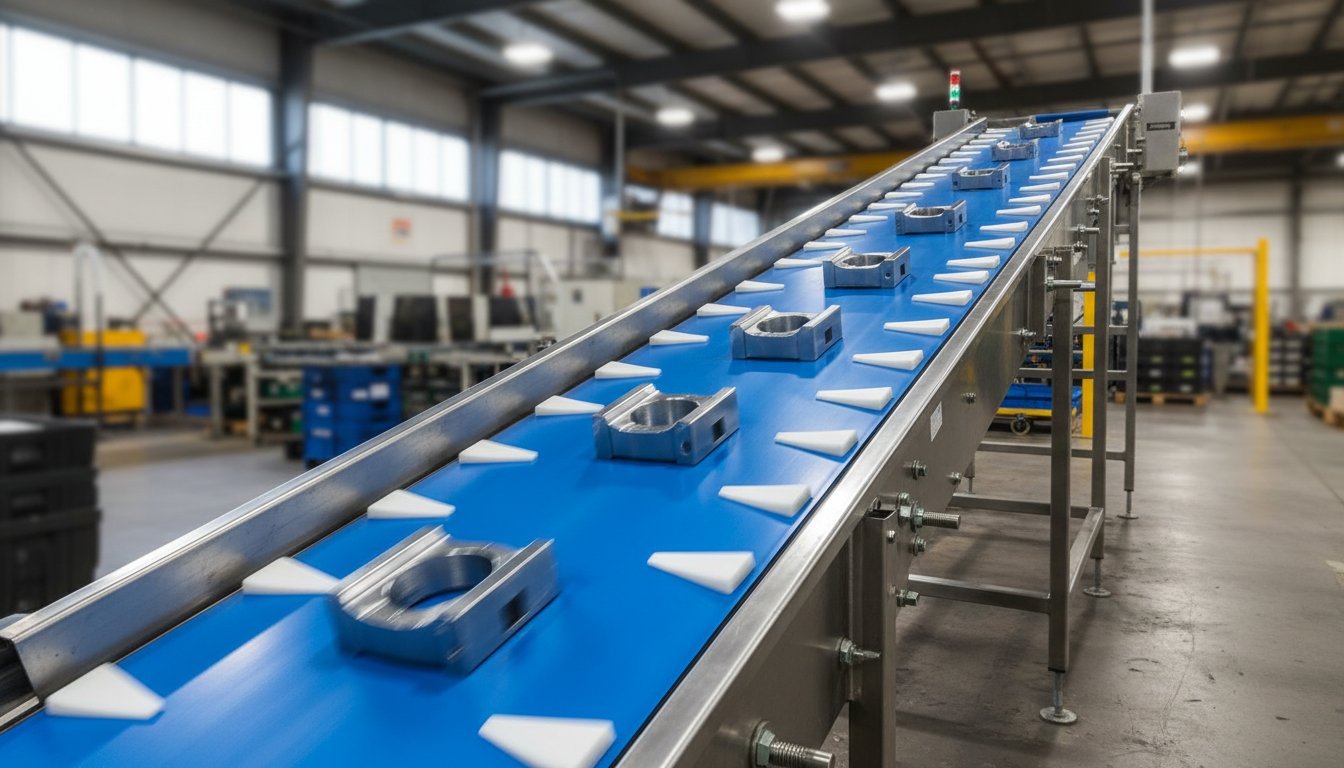
Cleats and flights are vital for moving products up steep inclines. T-cleats work best for general purpose tasks. C-cleats handle heavier loads better by providing a scooped profile. We often recommend 1-inch (25mm) cleats for small parts. For bulk materials, 3-inch (75mm) cleats provide the necessary grip. Corrugated sidewalls prevent spillover on high-speed lines. This keeps your floor clean and reduces product loss.
Splicing and Lacing for Maximum Strength
The way you join your belt determines its lifespan. Finger splices create a smooth, endless surface. This is perfect for delicate products or high-speed sensors. Mechanical lacing allows for quick, on-site repairs. It is the best choice if you cannot afford a long shutdown. We recommend specific lacing types for pulleys under 4 inches (100mm). This prevents metal fatigue and premature belt failure.
Specialty Materials and Coatings
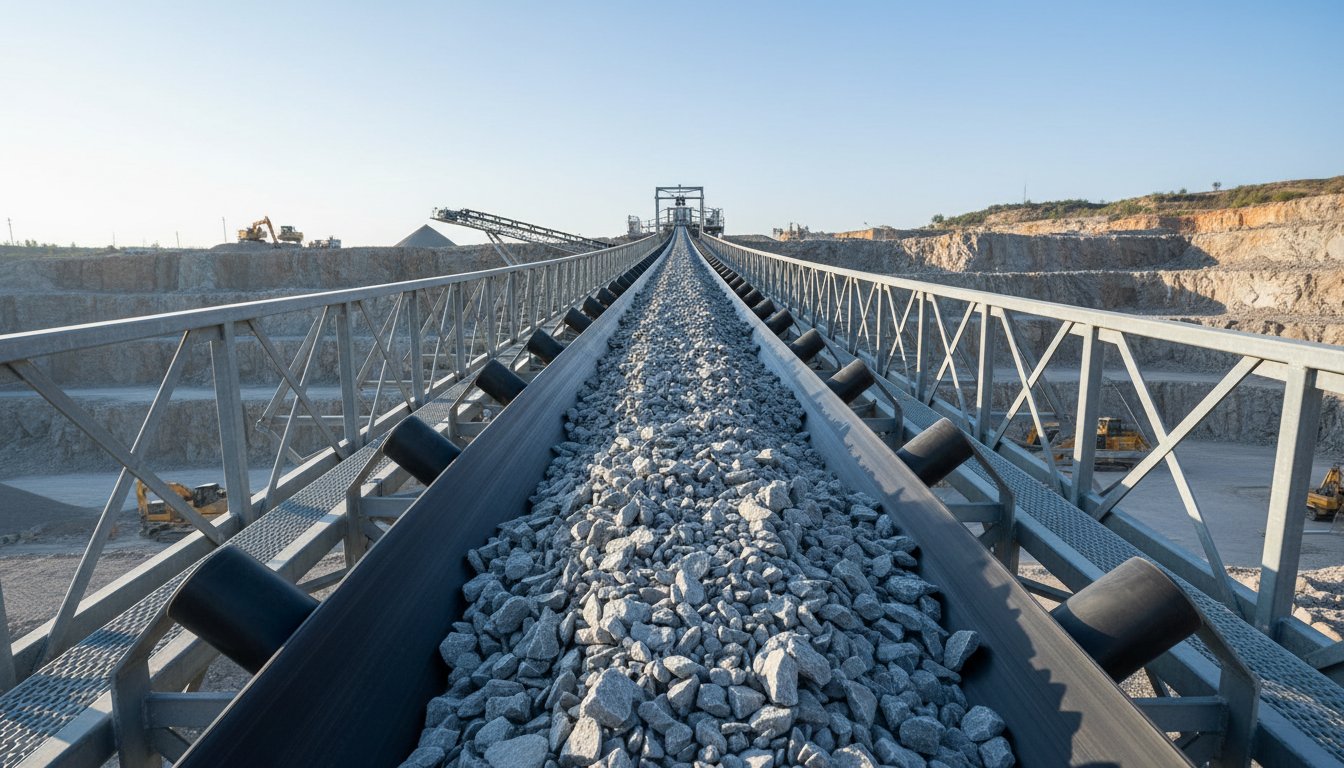
Sticky food applications require non-stick coatings. If you handle electronics, you need conductive materials to stop static buildup. For abrasive materials like rock or glass, Jealco International, Inc. heavy-duty belting offers the durability you need. When we ship these custom solutions globally, we ensure all documentation aligns with U.S. Customs and Border Protection requirements. This prevents costly delays at the port.
V-guides are another small addition that makes a huge difference. They keep your belt running straight every single time. Without them, you risk edge wear and motor strain. We have seen clients reduce maintenance hours by 15% just by switching to the right guide and splice combination. If you need help choosing the right fabrication for your machine, you can browse our technical catalog for more details.
Choosing Between a Manufacturer and an Independent Supplier
Buying direct from a manufacturer seems like a shortcut. It feels like you're cutting out the middleman. But manufacturers are often biased. They only want to sell you the products they make on their own machines. If their factory is running behind, your production line stays down. As an independent custom conveyor belting supplier, we operate differently. We aren't restricted by a single brand's inventory or production limits.
The Advantage of Brand Independence
Our brand independence is your biggest asset. We source across thousands of brands to find the exact material you need. In 2026, the aftermarket segment controls 54% of the conveyor belt market. This is because businesses need more than just a generic part. They need a partner who can find direct equivalents when a primary brand is backordered. We ensure every belt we source complies with OSHA conveyor safety standards. This protects your workers and your equipment from unnecessary risks.
Mid-Market Focus: No Minimums, No Hassle
Big corporations often have rigid account minimums that alienate mid-market companies. You shouldn't have to order 5,000 feet (1,524m) of belting just to get a technical expert on the phone. We focus on flexibility as your custom conveyor belting supplier. Whether you need a single custom belt for a specialized machine or a full set for your belt conveyors, we treat your order with the same urgency. We don't require corporate contracts or massive volume commitments to provide high-level support.
Our consultative approach means we start with your machine, not our catalog. We look for the best price-to-performance ratio across the entire market. If your current light-duty conveyor belting is failing, we'll find a better alternative from a different brand. We've seen clients reduce their replacement frequency by 22% just by switching to a brand that better fits their thermal environment. We take the time to solve the problem, while manufacturers just try to hit their sales targets.
We also analyze how the belt interacts with your chain, pulleys, and sprockets. A manufacturer might ignore how a specific belt thickness affects your drive system. We don't. We ensure the entire mechanical assembly works in harmony. This attention to detail is why mid-market firms trust us over giant corporate suppliers who prioritize national accounts over individual solutions.
Navigating International Logistics for Custom Belts
Sourcing the right belt is only half the battle. Shipping 500 lbs (226 kg) of rubber overseas is a complex puzzle. If the paperwork is wrong, your production line stays down for weeks. As your custom conveyor belting supplier, we solve these logistics problems early. We don't just find the part; we ensure it reaches your floor.
Most manufacturers assume you have a dedicated customs department. We know that mid-market companies often don't. That's why we handle the export paperwork for you. We manage the "shipping headache" so you can focus on your operations. Our independence allows us to choose the most reliable freight forwarders for your region.
Customs and Export Documentation Simplified
Accurate HTS codes matter for your bottom line. A wrong code causes surprise duty costs. We handle VAT and international duties without the stress. Our team understands global shipping lanes. We navigate port requirements in Europe, Asia, and the Americas. This technical precision prevents your belt from being stuck in a warehouse for 14 days.
Packaging for the Long Haul
Heavy belts need more than a cardboard box. We crate custom belts to prevent edge damage during transit. This is critical for high-precision light-duty conveyor belting. We also protect materials from humidity and temperature swings in containers. You can track your shipment from our warehouse directly to your site. We provide full visibility throughout the entire journey.
Logistics shouldn't be the reason your project fails. We have spent years building a network of reliable global partners. We ensure every technical specification matches the export declaration. This attention to detail saves you time and money. If you are tired of shipping delays, contact our export specialists today to discuss your next shipment.
How We Find Your Perfect Custom Conveyor Solution
We don't just take orders. We solve the mechanical problems that slow you down. Many businesses struggle to find a custom conveyor belting supplier that actually understands their machine. We start by listening to your pain points. If your current belt is slipping or wearing too fast, we find out why before suggesting a replacement.
Our independence is our greatest strength. We aren't forced to sell you a specific brand. Instead, we use our deep industry ties to find "impossible" parts. If a manufacturer has discontinued a specific profile, we search our network of thousands of brands to find a match. This flexibility keeps your facility running while others stay stuck waiting on corporate backorders.
The Jealco Sourcing Process
Getting started is simple. You can tell us your technical specs or send us a photo of the failing belt. We analyze the wear patterns and environmental factors. Then, we search our global network to find the best material for your application. You receive a custom quote with no hidden corporate fees or account minimums. We prioritize speed and accuracy for every mid-market client we serve.
Beyond Belting: Complete Material Handling
A belt is only as good as the system driving it. If you need matching pulleys or sprockets, we source those too. We can even find the electric motors needed to power your new assembly. Having one point of contact for your entire conveyor system reduces errors. It also simplifies your international logistics and customs documentation by keeping everything on one manifest.
We've helped clients source custom solutions for over 25 years. We understand the pressure of maintaining a global production site. Whether you need a single 12-inch (305mm) belt or a complete system overhaul, we're ready to help. Contact Jealco for your custom belting quote today!
We believe in long-term partnerships. That's why we offer a consultative approach rather than a standard sales pitch. We want your equipment to last longer and run more efficiently. By looking across the entire market, we ensure you get the best performance for your investment. Reach out to our team and let us find the exact part you've been looking for.
Optimizing Your Production for 2026 and Beyond
Manufacturing demands are evolving rapidly. Standard belts often fail under the specific thermal and chemical loads of modern plants. Choosing the right custom conveyor belting supplier means moving past catalog limitations to find a solution built for your environment. We focus on the fabrication details like cleats, V-guides, and splices that keep your floor safe and efficient.
We've been family-owned and operated since 1950. This longevity gives us deep industry ties to thousands of brands. We don't have manufacturer restrictions; we find the best price-to-performance ratio for your specific needs. Our expertise in international export and customs documentation ensures your shipment arrives without port delays or paperwork errors. You get the flexibility of a mid-market partner with the reach of a global distributor.
Your equipment deserves a belt that lasts. We are ready to help you navigate the new 2026 ISO standards and find the perfect fit for your machine. Let us find your custom belting solution-Contact Jealco now!
Let's get your production line running at peak performance. We'll find the parts others call impossible.
Frequently Asked Questions
What is the typical lead time for a custom conveyor belt?
Lead times usually fall between 5 and 10 business days for most custom fabrications. This depends on the specific material and the complexity of your request. We use our network of thousands of brands to find the fastest available stock. If one factory is backed up, we switch to a direct equivalent to keep your project on schedule.
Do you have a minimum order quantity for custom-fabricated belts?
We don't have a minimum order quantity for custom-fabricated belts. Our focus is on the mid-market and single-line operations. You can order one custom belt without hitting a corporate account minimum. This flexibility is why we are a preferred custom conveyor belting supplier for smaller plants and specialized facilities.
Can you provide FDA-compliant belts for food processing?
Yes, we provide FDA-compliant belts for food processing and pharmaceutical applications. These materials meet strict safety standards for direct food contact. We specialize in solutions for the bakery and pastry sectors where hygiene is a top priority. Every food-grade belt we source is designed to resist bacteria buildup and handle frequent washdowns.
How do I measure my conveyor for a replacement belt?
Measure the width and the total length of the belt while it's under tension. Use a flexible tape measure to find the outer circumference. If the belt is 100 inches (2540 mm) long, provide that exact number. A photo of the machine's data plate also helps us verify the original manufacturer specs.
What information do I need to provide for a custom quote?
You need to provide the belt width, total length, and the environment it operates in. Tell us if it handles high heat or oily products. Mention any fabrication needs like 2-inch (50 mm) cleats or V-guides. This data allows us to find the best price-to-performance ratio for your specific machine.
Do you ship custom conveyor belting internationally?
We ship custom conveyor belting to global sites every day. Our team manages the export paperwork and customs documentation for you. We have deep expertise in navigating shipping lanes across Europe, Asia, and the Americas. This ensures your order reaches your site without being held at the port for weeks.
What is the difference between a finger splice and a mechanical lace?
A finger splice creates a smooth, endless surface by heat-pressing interlocking fingers of material. It's best for high-speed lines or delicate products. Mechanical lacing uses metal hooks or staples for a quick connection. It allows for fast on-site repairs without requiring you to disassemble the conveyor frame.
Can you source belts for older or discontinued conveyor models?
Yes, we can source equivalents for older or discontinued conveyor models. We aren't tied to a single manufacturer's catalog. Our independence as a custom conveyor belting supplier lets us match the technical specs of parts that are no longer in production. We ensure the new belt fits your existing pulleys and rollers perfectly.