Selecting a belt based on brand recognition rather than rigorous engineering specifications is the most common reason for premature failure in high-impact environments. You've likely dealt with the operational headache of a belt with 8 mm / 0.31 inch covers wearing thin because the compound wasn't precisely matched to your material's abrasive nature. These heavyweight conveyor belts are the backbone of your facility, yet procurement often feels like a gamble between opaque distributor pricing and logistical delays that halt production for weeks.
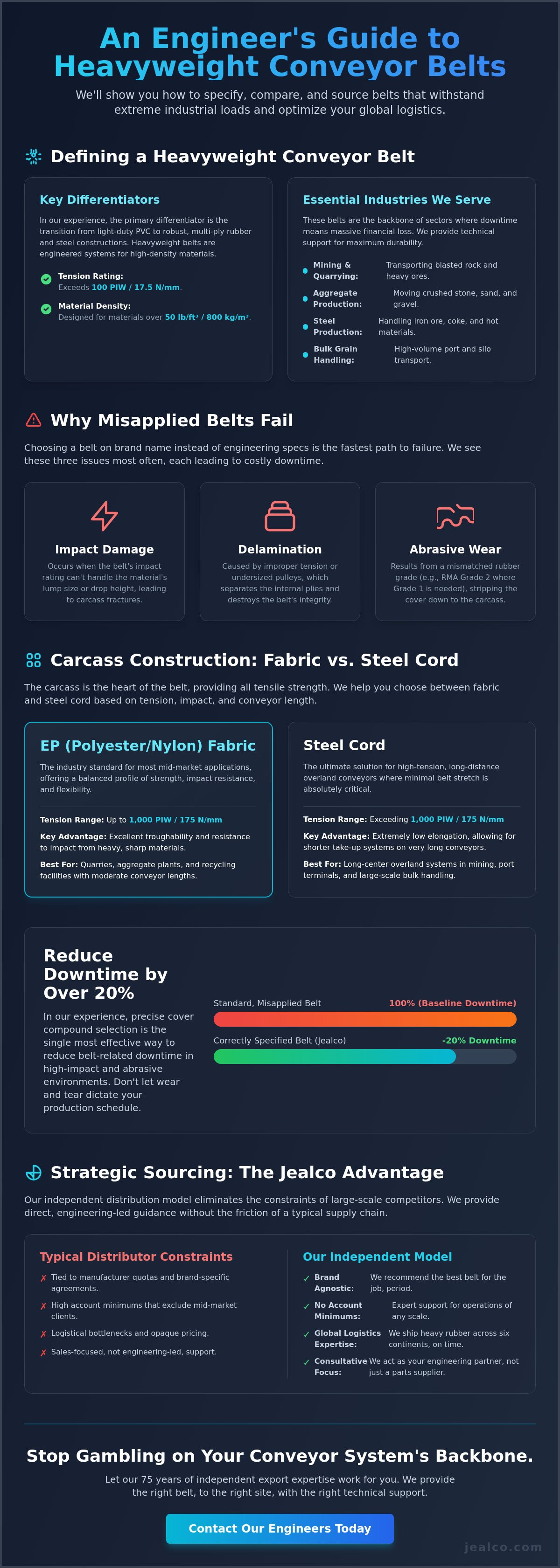
We know that for an operations manager, a belt is only as good as its uptime and the reliability of its delivery to the site. In our experience, precise cover compound selection can reduce belt-related downtime by over 20% in high-impact aggregate facilities. We'll show you how to specify, compare, and source belts that withstand extreme industrial loads while optimizing your global logistics.
We'll examine the critical updates in the EN ISO 14890:2026 standards and provide a technical framework for evaluating cover compounds against your specific application. You'll also learn how our independent distribution model bypasses the constraints of large-scale competitors, offering technical guidance without account minimums to ensure your components arrive on time, regardless of your location across six continents.
Key Takeaways
- Learn to distinguish between multi-ply textile systems and light-duty alternatives to ensure your belt survives high-impact industrial loading.
- Identify the correct RMA Grade 1 or Grade 2 cover compounds for heavyweight conveyor belts to maximize abrasion resistance and prevent premature cover wear.
- Master the technical differences between polyester/nylon (EP) carcasses and steel cord systems for long-center, high-tension applications.
- Discover how an independent distribution model eliminates manufacturer quotas and logistical bottlenecks when shipping heavy rubber across six continents.
- Understand the critical relationship between motor torque and belt tension to prevent slippage and extend the service life of your system components.
Defining Heavyweight Conveyor Belts for Harsh Industrial Environments
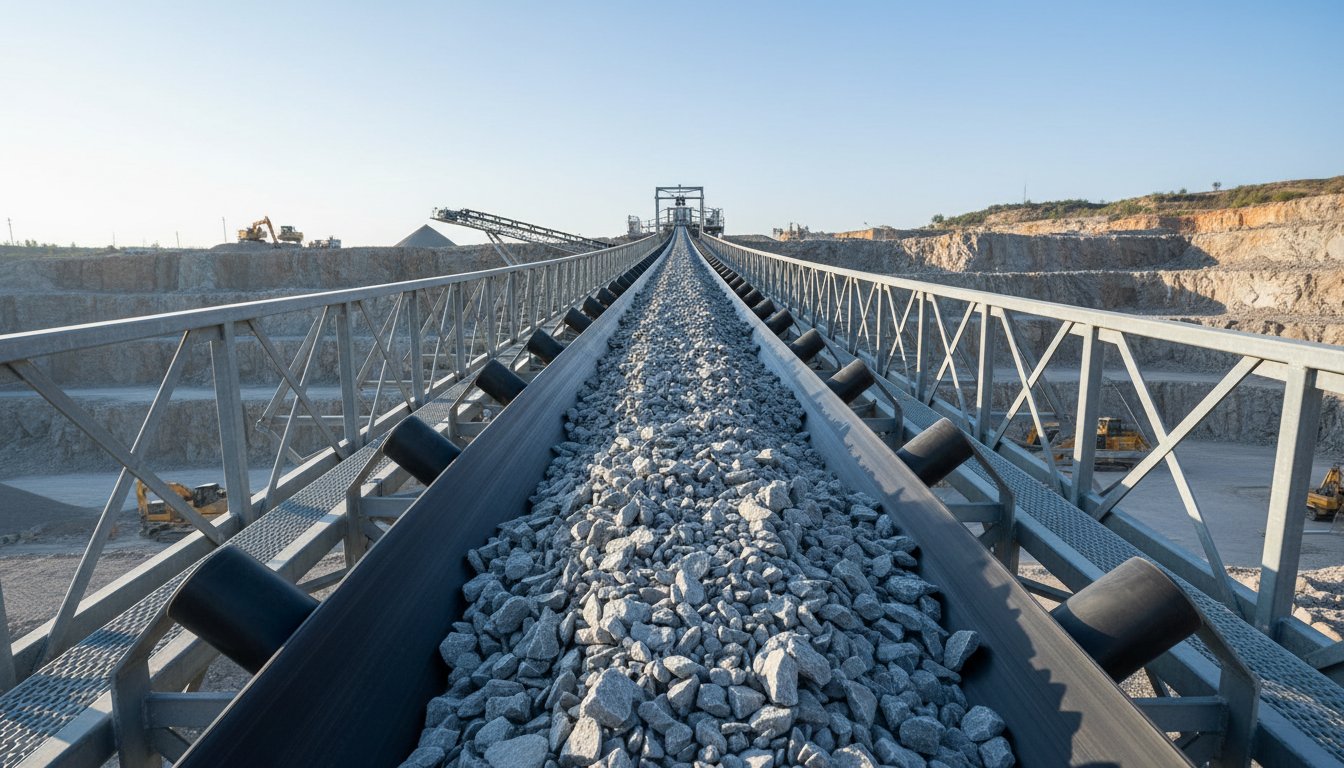
Heavyweight conveyor belts are engineered systems designed to transport high-density materials under extreme tension. Unlike systems used for light parcel handling, these belts serve as the primary transport mechanism for raw earth, ore, and bulk solids. We define these belts by their multi-ply fabric or steel cord carcass, which provides the necessary tensile strength to move thousands of tons per hour without failure. Understanding the evolution of conveyor belt technology requires looking beyond the external rubber to the internal reinforcement. This carcass acts as the structural heart of the belt, dictating its ability to support heavy loads and resist elongation over long distances.
These belts are essential in industries where equipment failure results in massive financial losses. We focus our technical support on sectors that demand maximum durability, including:
- Mining and Quarrying: Moving blasted rock and heavy ores.
- Aggregate Production: Transporting crushed stone, sand, and gravel.
- Steel Production: Handling iron ore, coke, and hot materials.
- Bulk Grain Handling: High-volume transport in port terminals and large silos.
What Defines "Heavyweight" in Belting?
In our experience, the primary differentiator is the transition from PVC-based constructions to heavy-duty rubber compounds. We typically categorize belting as heavyweight when its tension rating exceeds 100 PIW / 17.5 N/mm. These systems are specifically engineered to handle bulk materials with a density exceeding 50 lb per cubic foot / 800 kg per cubic meter. This distinguishes them from light-duty conveyor belting, which lacks the carcass integrity required for heavy industrial service. Heavyweight belts are built to thrive where thinner, less robust materials would simply tear under the stress of the load.
Common Failure Points in Misapplied Belts
Misapplication leads to rapid and expensive equipment failure. We see this most frequently when a belt's impact rating isn't matched to the material lump size. For instance, 6 in / 150 mm rocks dropped from a significant height will fracture a carcass if the impact protection is insufficient. Delamination is another critical risk we encounter. This occurs when improper belt tension or undersized pulley diameters cause the internal layers to separate, effectively destroying the belt's structural integrity. Finally, abrasive fines in recycling or aggregate operations can strip a cover down to the carcass in months if the rubber grade doesn't meet the necessary standards for the specific material being moved. Choosing the wrong specification doesn't just shorten belt life; it risks the safety of your entire conveyor system.
Evaluating Carcass Construction and Tension Ratings
The carcass provides the necessary tensile strength and load support for heavyweight conveyor belts. While the rubber cover protects the belt from the environment, the carcass determines how much weight the system can move over a specific distance. We categorize these reinforcements into two primary types: fabric and steel cord. Each serves a distinct operational purpose based on the required tension and the length of the conveyor center. Proper selection prevents the belt from stretching beyond the limits of your take-up unit during peak loads.
Carcass Materials: Fabric vs. Steel Cord
EP (Polyester/Nylon) fabric is the standard for most mid-market industrial applications. The polyester warp provides high strength and low stretch, while the nylon weft allows for excellent impact resistance and troughability. For applications exceeding 1,000 PIW / 175 N/mm, we recommend steel cord carcasses. These systems offer minimal elongation and are essential for long-center conveyors where fabric belts would stretch excessively. For specific environments like underground mining, we provide solid woven pvc conveyor belting to meet stringent fire resistance requirements. Adhering to OSHA conveyor safety regulations ensures that your carcass selection supports a safe working environment by preventing catastrophic belt breaks.
Understanding Tension Ratings and PIW
Tension is measured in PIW (Pounds per Inch of Width) or the metric equivalent, N/mm. Accuracy in these conversions is vital during the procurement process. For example, a belt rated at 330 PIW is approximately 60 N/mm. To determine your required tension, we calculate the total force based on the material load, the angle of incline, and the belt speed. In our experience, over-specifying ply count can lead to tracking issues on smaller pulleys. A belt that is too stiff will not trough correctly, meaning it won't make proper contact with the center idler. This lack of contact causes the belt to wander, leading to edge damage and spilled material. If you are unsure which tension rating fits your existing motor torque, you can consult with our technical team for a precise carcass evaluation.
Selecting Cover Compounds for Specific Material Challenges
The rubber cover of heavyweight conveyor belts serves as the sacrificial layer that protects the carcass from the material being transported. Selecting the wrong compound often results in the most common objection we hear from operations managers: "Standard belts always crack in our heat." This failure isn't a fault of the material itself but a mismatch between the rubber chemistry and the operational environment. We specify these compounds based on their physical properties, specifically their resistance to abrasion, heat, oil, and flame, to ensure your system doesn't suffer from premature cover degradation.
Abrasion Resistance: Grade 1 and Grade 2 Standards
The Rubber Manufacturers Association (RMA) classifies covers into Grade 1 and Grade 2 based on their physical limits. Grade 1 covers are engineered for the most severe service, such as primary crushed ore or large, sharp rocks that cause high-impact gouging. These compounds prioritize tensile strength and tear resistance. Grade 2 covers are the industry standard for general purpose aggregate, sand, and gravel where abrasion is the primary concern rather than impact. While RMA standards are common in North America, we also utilize the DIN 22102 standard to measure abrasion loss in cubic millimeters. For example, a DIN X compound typically allows for 120 mm³ of loss, while a DIN W compound is even more robust, limited to only 90 mm³ of loss under test conditions.
Specialty Compounds: Heat, Oil, and Flame Resistance
Standard rubber begins to harden and crack when exposed to sustained temperatures. For materials like hot cement clinker or foundry sand, we provide heat-resistant belts capable of handling constant temperatures up to 400°F / 204°C. If your facility processes wood chips or grain, you must use MOR (Moderate Oil Resistance) compounds. These prevent the belt from swelling and delaminating when exposed to terpenes or vegetable oils. For hazardous environments, particularly in underground mining or grain terminals, MSHA-certified flame-retardant belts are a requirement. Adhering to OSHA conveyor safety standards ensures that your compound choice doesn't just improve longevity but also maintains strict site safety protocols.
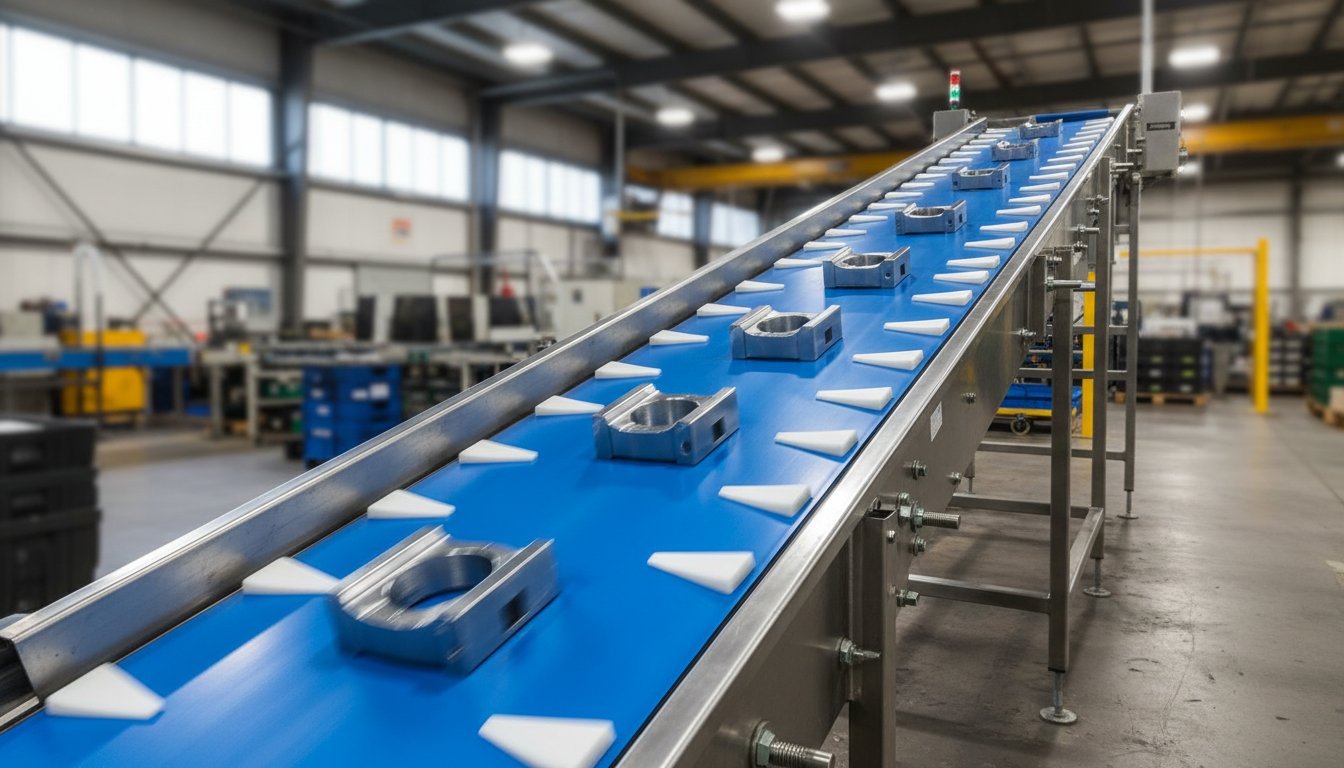
When your application involves steep angles, smooth covers often allow for material rollback. In these cases, we recommend incline conveyor belting with molded cleats or high-friction textures. These specialty covers provide the necessary grip to move bulk solids up inclines without sacrificing the durability of the underlying rubber. Finding the balance between abrasion resistance and flexibility is critical; a cover that is too hard may resist wear but can crack if the pulley diameters are too small for the belt's thickness. We ensure that your heavyweight conveyor belts are matched to both the material and the mechanical constraints of your system.
Strategic Sourcing: Navigating Global Logistics and Independent Distribution
Procuring heavyweight conveyor belts often involves navigating rigid manufacturer quotas and regional supply constraints. We operate differently. As an independent distributor, we aren't bound by brand-specific agreements that force us to recommend a specific manufacturer. This independence allows us to prioritize your technical requirements and lead times over meeting a factory's volume target. We focus on providing consultative support for mid-market operations that require high-performance solutions without the bureaucracy of mega-distributors.
The Independent Distributor Advantage
Our brand-agnostic approach provides a significant advantage when regional shortages occur. We leverage our relationships across global manufacturing hubs to source high-quality components when domestic stock is depleted. This flexibility ensures your project stays on schedule regardless of local supply chain volatility. We also provide custom slit-to-width services in-house. This means you don't pay manufacturer surcharges for custom dimensions. We accommodate orders of all sizes, maintaining a strict policy of no account minimums for our international partners.
Streamlining Global Export Logistics
Shipping oversized rolls of heavy rubber presents unique challenges. A standard roll might reach widths of 72 in / 1,828 mm and weigh several tons. We've spent 75 years perfecting the export process across six continents. Our team manages every detail of the freight process, from securing specialized containers to ensuring customs compliance. We handle all necessary documentation, including Certificates of Origin and Bills of Lading (BL), to prevent expensive delays at the port.
We specialize in direct-to-site delivery for remote mining and infrastructure projects. Whether your site is in a developed industrial zone or a remote region outside North America, our logistics network ensures predictable delivery. In our experience, proactive documentation management reduces port storage fees by an average of 15% for our international clients. We don't just sell the belt; we manage the entire journey from the factory floor to your conveyor system. Contact our export specialists to discuss your specific logistics requirements and receive a technical consultation for your next project.
Optimizing Belt Longevity through Proper Component Integration
Viewing a conveyor as a collection of individual parts is a mistake that leads to premature failure. We treat the entire assembly as a single integrated system where the heavy-duty conveyor belting interacts dynamically with pulleys, rollers, and drive units. For heavyweight conveyor belts, improper pulley diameters cause the internal plies to separate, effectively destroying the carcass from the inside out. Ensuring that your mechanical components are sized for the thickness and stiffness of your belt is the first step toward operational reliability.
Start-up represents the most stressful period for any industrial belt. If the motor torque isn't precisely matched to the belt's friction coefficient, the belt will slip on the drive pulley. This slippage generates intense heat, which glazes the rubber and reduces its grip, eventually leading to catastrophic failure. We verify that your motor and gearbox configurations provide the necessary soft-start capabilities to protect the belt's structural integrity during these critical high-tension moments.
Essential Belting Accessories for System Integrity
Protecting the loading zone is vital for extending the service life of your equipment. We recommend impact beds over traditional idlers for high-tonnage applications because they provide continuous support across the belt's width. This prevents the "trampoline effect" that causes material spillage and carcass bruising from falling lumps. You must also choose between mechanical fasteners for ease of maintenance and vulcanized splicing for a seamless, high-strength joint. Our range of belting accessories, including primary and secondary cleaners, ensures that abrasive carryback doesn't wear down your rollers or cause tracking issues.
Calculating Total Cost of Ownership (TCO)
Evaluating a belt solely on its initial purchase price ignores the true cost of operation. In our experience, the cost of a single hour of unplanned downtime in a mining or aggregate facility can exceed the price of the replacement belt itself. Investing in high-efficiency electric motors reduces long-term energy consumption and provides better control over belt tension. A higher-grade cover compound may require a larger upfront investment, but it pays for itself by extending the replacement cycle in high-tonnage applications. We help you calculate these variables to ensure your procurement strategy prioritizes long-term operational success over short-term savings.
Securing Operational Efficiency through Technical Specification
Specifying the correct heavyweight conveyor belts requires a precise balance between carcass tension, cover chemistry, and mechanical integration. We've established that over-specifying ply count or ignoring motor torque leads to avoidable system failures and expensive downtime. By focusing on the total cost of ownership rather than just the initial purchase price, you ensure your facility maintains peak production levels in the most demanding environments. A well-engineered system doesn't just move material; it protects your bottom line.
Our 75 years of industrial export expertise allows us to navigate the complexities of global shipping across six continents without the constraints of manufacturer quotas. We provide independent, brand-agnostic technical advice to ensure you receive the best solution for your specific application. Whether you need a custom slit-to-width belt or help navigating international customs, we manage the entire process to keep your project on schedule. We don't believe in account minimums or supply chain constraints that hinder your growth.
Contact Jealco International, Inc. for a technical consultation on your heavyweight belting needs to optimize your next procurement cycle. We look forward to supporting your long-term operational success and providing the robust solutions your facility requires.
Frequently Asked Questions
What is the difference between Grade 1 and Grade 2 heavyweight conveyor belts?
Grade 1 covers are designed for extreme impact and gouging from sharp materials like primary crushed ore. Grade 2 covers focus on abrasion resistance for general aggregate and sand applications. While both handle heavyweight conveyor belts, Grade 1 offers higher tensile strength to prevent carcass exposure during heavy loading. We help you choose based on your material lump size and drop height to ensure the cover doesn't fail prematurely.
How do I calculate the PIW rating required for my conveyor system?
You calculate the required PIW (Pounds per Inch of Width) by dividing the maximum tension at the drive pulley by the belt width. This calculation must factor in the weight of the material load, the vertical lift of the incline, and the friction of the idlers. For metric systems, we convert this value to N/mm. We recommend a safety factor of at least 8:1 or 10:1 to ensure the carcass withstands sudden surge loads without stretching.
Can heavyweight conveyor belts be used on incline systems?
Heavyweight belts are excellent for incline systems but typically require a textured or cleated surface to prevent material rollback. Smooth covers lose efficiency at angles exceeding 15 degrees. We provide molded cleats and high-friction compounds specifically for these steep applications. This ensures that bulk solids stay on the belt during transport while maintaining the structural integrity and troughability of the heavy rubber carcass.
What are the most common causes of belt delamination in heavy-duty applications?
Delamination usually occurs when the belt is forced around pulleys that are too small for its thickness. This mechanical stress breaks the bond between the internal plies. Other common causes include using the wrong chemical compound for oily materials or excessive tension that exceeds the carcass rating. We ensure your pulley diameters match the belt's ply count to prevent this internal separation and extend the life of the system.
How does temperature affect the lifespan of a heavyweight rubber belt?
Sustained high temperatures accelerate the oxidation of rubber, leading to hardening and surface cracking. Standard compounds begin to degrade when material temperatures exceed 200°F / 93°C. For hotter applications, such as cement clinker or foundry sand, we specify heat-resistant compounds that survive up to 400°F / 204°C. Proper compound selection can double the service life of your belt in thermal environments by maintaining the flexibility of the rubber covers.
Do you provide custom slitting for heavyweight belts with no minimum order?
We provide in-house custom slitting to your exact width requirements with no minimum order constraints. This independence allows us to bypass manufacturer surcharges and long lead times for non-standard sizes. Whether you need a single 24 in / 610 mm roll or a full container of 72 in / 1,828 mm widths, we accommodate your specific project needs. Our model focuses on mid-market flexibility rather than rigid factory quotas.
What documentation is required for international shipping of industrial belting?
International shipments require a commercial invoice, a Bill of Lading (BL), and a Certificate of Origin. Depending on the destination, you might also need specific packing lists and customs declarations for oversized rolls of heavyweight conveyor belts. Our team manages this documentation to ensure your cargo clears customs without incurring storage fees. We've spent 75 years perfecting these logistics across six continents to provide predictable delivery times.
How do I choose between a 2-ply and a 4-ply heavyweight carcass?
A 2-ply carcass provides better flexibility and is suitable for systems with smaller pulley diameters. A 4-ply carcass offers superior load support and impact resistance for high-tonnage bulk materials. Choosing the wrong ply count leads to tracking issues or premature carcass failure. We analyze your pulley diameters and material density to determine which reinforcement provides the best balance of flexibility and strength for your specific conveyor configuration.