In a hazardous location, a single spark is all it takes to trigger a catastrophic event. While engineers rightly focus on specifying explosion-proof motors and drive components, a frequently overlooked ignition source is the simple hand tool used for routine maintenance and adjustments. A standard steel wrench or hammer striking a surface can easily generate a spark hot enough to ignite flammable gases, vapors, or combustible dusts.
This is not a risk you can afford to take. The solution lies in using tools specifically engineered to prevent mechanical sparks in these volatile environments. This guide explains why non-sparking hand tools are critical for safety, how to select the correct alloy for your application, and the proper procedures for their use and maintenance.
What Defines a Hazardous Location for Hand Tool Use?
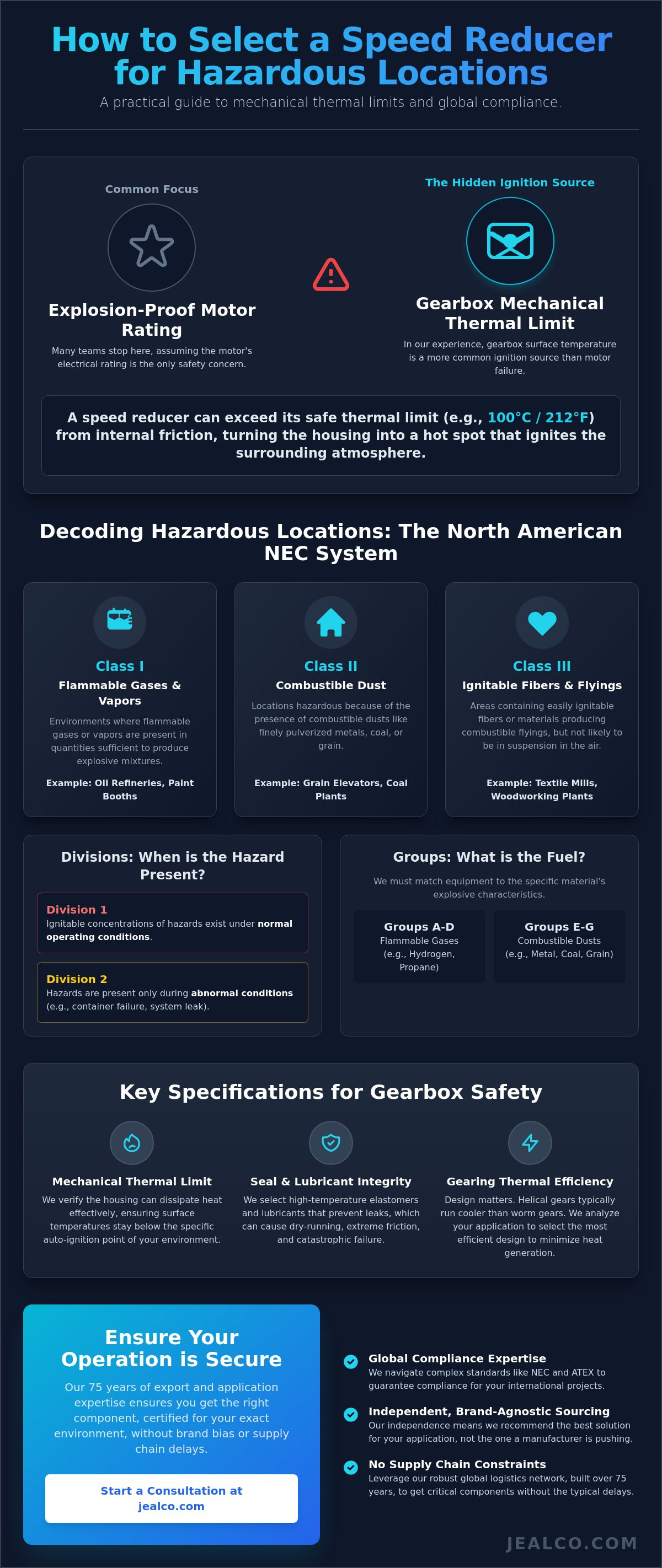
hazardous locations are formally defined by standards like the National Electrical Code (NEC) in North America and the ATEX directive in Europe. These areas contain sufficient concentrations of flammable or combustible substances in the atmosphere to create a risk of explosion or fire.
For the purpose of hand tool safety, the key takeaway is simple: if an area requires explosion-proof electrical equipment, it also demands the use of non-sparking mechanical tools.
- Class I Locations: Flammable gases or vapors are present, such as in oil refineries, chemical plants, and paint finishing booths.
- Class II Locations: Combustible dust is present, common in grain elevators, coal processing facilities, and plastics manufacturing.
- Class III Locations: Ignitable fibers or flyings are present, such as in textile mills or woodworking plants.
In these zones, every piece of equipment, down to the smallest screwdriver, must be chosen to eliminate potential ignition sources. A standard steel tool introduces an unacceptable and unnecessary variable into your safety protocols.
The Science of Sparks: Why Standard Steel Tools Are a Liability
When you strike a steel tool against another hard surface, you are chipping off microscopic particles of metal. The friction and force of this impact heat these tiny particles to incandescence, creating a visible spark. These friction sparks from ferrous (iron-based) materials can reach temperatures well over 1,000°C (1,832°F), easily exceeding the auto-ignition temperature of many common industrial chemicals and dusts.
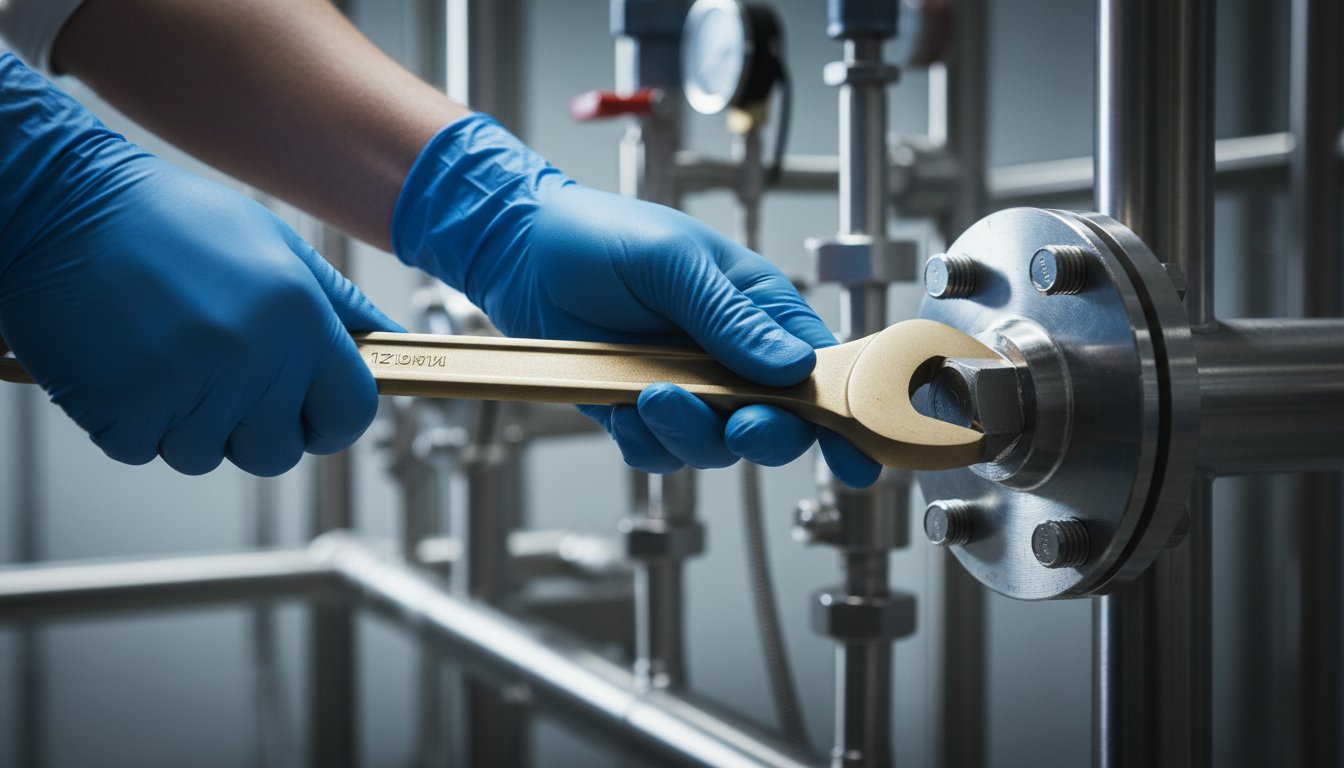
Non-sparking tools are different. They are manufactured from non-ferrous alloys, typically copper-based metals. When these softer materials strike a surface, any particles that abrade off do not have the hardness or thermal properties to generate a hot, high-energy spark. They may create what is sometimes called a "cold spark," which has insufficient energy to ignite a hazardous atmosphere.
Using a non-sparking tool is a fundamental engineering control that removes the risk of mechanical sparks at the source, protecting your personnel and your facility.
Choosing Your Alloy: Copper Beryllium vs. Aluminum Bronze
Non-sparking tools are primarily made from two common alloys, each with distinct properties suited for different applications. Understanding the trade-offs between them is key to making the right selection.
Aluminum Bronze (AlBr)
Aluminum Bronze is the most widely used alloy for general-purpose non-sparking tools. It offers an excellent balance of safety, strength, and corrosion resistance, making it the workhorse for maintenance tasks in most hazardous environments.
- Safety: Considered the safer material composition for tool manufacturing and use.
- Corrosion Resistance: Exceptionally resistant to corrosion, making it ideal for offshore, marine, and chemical processing applications. *Durability: Provides good mechanical strength suitable for most standard industrial tasks.
Copper Beryllium (CuBe)
Copper Beryllium is a harder and stronger alloy, offering mechanical properties that approach those of high-quality steel tools. This makes it the preferred choice for applications that require high torque or significant impact forces without tool deformation.
- Strength: The highest tensile strength and hardness available in a non-sparking alloy, essential for high-torque wrenches or durable striking tools.
- Wear Resistance: Superior durability for tools that see frequent, heavy use.
- Safety Note: While perfectly safe for normal use, beryllium dust can be a health hazard. Never grind, re-sharpen, or heavily modify a CuBe tool without following strict safety protocols, including proper ventilation and respiratory protection.
A secondary but critical feature of both alloys is that they are non-magnetic. This makes them essential for working near sensitive electronic equipment, MRI machines, or military applications where magnetic interference must be avoided.
A Practical Guide to Selecting Non-Sparking Safety Tools
Choosing the right tool involves more than just picking a wrench out of a catalog. It requires a methodical approach to ensure you are meeting the specific safety demands of your environment and task.
- Assess Your Environment: Identify the specific flammable gases, liquids, or combustible dusts present in the work area. Knowing their auto-ignition temperatures helps contextualize the importance of preventing any and all sparks.
- Match the Tool to the Task: Consider the mechanical stress the tool will endure. A shovel for moving combustible material has different requirements than a socket wrench used to tighten a valve flange. For high-torque or high-impact tasks, the superior strength of Copper Beryllium may be necessary. For most other jobs, Aluminum Bronze is the appropriate and more cost-effective choice.
- Verify Certifications: Look for tools that are certified by internationally recognized safety bodies like Factory Mutual (FM). An "FM Approved" mark provides independent verification that the tool meets rigorous standards for non-sparking properties.
- Consult with an Expert: As an independent distributor, we can help you navigate these choices. We work with premier manufacturers like Ampco Safety Tools to source the exact alloy and tool type your application demands, ensuring compliance and safety without compromise.
Best Practices for Maintenance and Longevity
Proper maintenance is critical to preserving the safety characteristics of your non-sparking tools. A contaminated or damaged tool can be just as dangerous as a standard steel one.
- Inspect Before Each Use: Visually check tools for excessive wear, cracks, or damage. More importantly, check for embedded foreign particles. A non-sparking wrench contaminated with steel grit from a rusty bolt can produce a dangerous spark.
- Keep Tools Clean: Regularly wipe down tools to remove dirt, grease, and any potentially flammable residues from the work area.
- Store Them Separately: Maintain a dedicated storage area for non-sparking tools. Storing them in the same toolbox as steel tools increases the risk of contamination and accidental misuse of a standard tool in a hazardous zone.
- Follow Safe Resharpening Procedures: If a tool requires redressing, always follow the manufacturer's safety guidelines. This is especially critical for Copper Beryllium tools to prevent the inhalation of hazardous dust.
The Jealco Advantage: Your Partner in Hazardous Area Safety
At Jealco, we understand that operational safety is a complete system. It extends from the large-scale electric motors driving your process to the hand tools your team uses to maintain it. For over 75 years, we have provided expert guidance on sourcing the right components for the most demanding and critical industrial environments.
Our position as an independent distributor means we are not locked into a single brand or supply chain. We partner with world-class manufacturers to provide the best possible solution for your specific problem. Whether you need a complete set of non-sparking tools for a new facility in Asia or a single, hard-to-find replacement wrench for an MRO task in North America, our global logistics network is ready to deliver.
We believe in a consultative approach, especially when it comes to safety. We have no account minimums, making us an ideal partner for mid-market operations and specialized facilities that require a high degree of technical expertise. Let us put our 75-year history to work for you.
Do not leave safety to chance. Contact our engineering team today for a comprehensive review of your hazardous area tool and equipment requirements.