
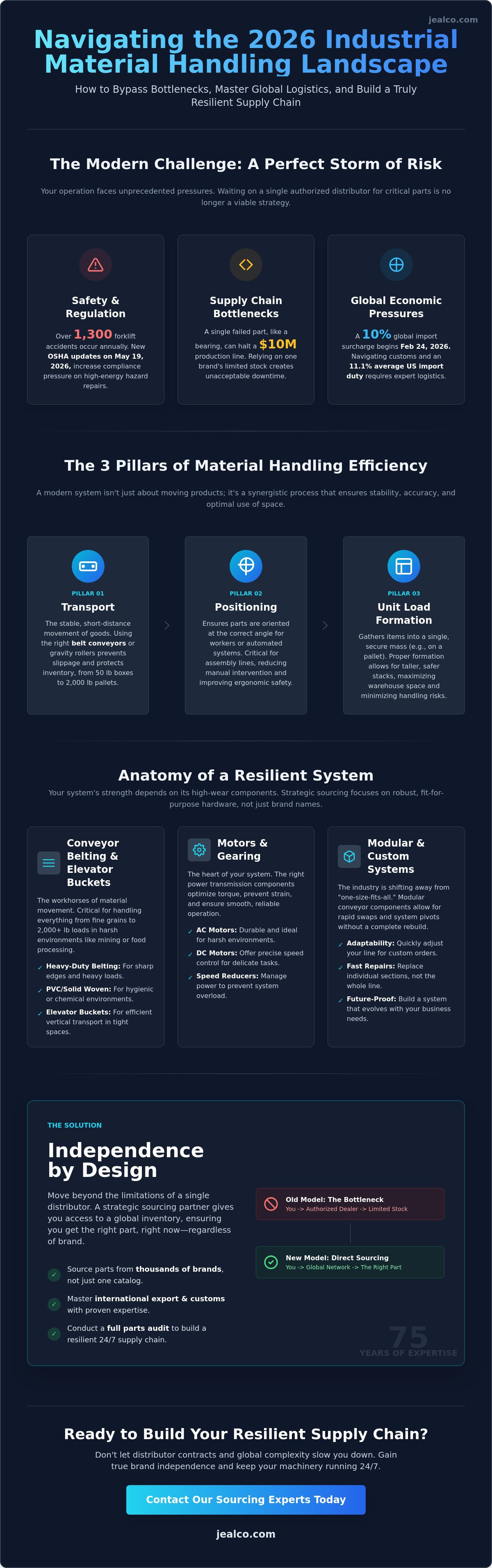
What if your authorized distributor is actually your biggest bottleneck? Over 1,300 forklift accidents happen every year. The 10% global import surcharge also started on February 24, 2026. Your industrial material handling strategy needs more than just a catalog. You must bypass backlogs and complex customs paperwork to stay competitive.
We know the pain of a stalled production line. You wait weeks for one specific part. It feels like you're stuck with one brand's limitations. We believe you deserve a reliable supply chain built on your terms, not a distributor's contract.
We'll show you how to gain true brand independence. We've spent 75 years mastering international logistics and custom sourcing for our partners. This guide covers strategic sourcing and expert shipping. You'll learn to handle the May 19, 2026, OSHA updates with ease and keep your operations moving forward.
Key Takeaways
- Learn how to identify high-wear components to prevent unexpected downtime in your industrial material handling systems.
- Discover how "independence by design" allows you to source parts from thousands of brands without the restrictions of authorized dealer agreements.
- Master the complexities of international export and customs documentation with proven strategies for shipping to Latin America and beyond.
- Follow our roadmap to conduct a parts audit and build a resilient supply chain that keeps your machinery running 24/7.
Table of Contents
What is Industrial Material Handling in 2026?
We define Material handling as the short-distance movement, protection, and storage of goods. It's the silent heartbeat of your facility. In 2026, the global market for this equipment is hitting $230.44 billion. This growth isn't just about more machines. It's about smarter, modular systems that adapt to your specific floor plan.
Industrial material handling isn't just about moving boxes. It's the backbone of your entire manufacturing process. Today, the industry is shifting toward modular conveyor components. These parts allow you to swap sections quickly without rebuilding the whole line. If you stick to a "one-size-fits-all" model, you'll face major bottlenecks. Your workflow is unique. Your equipment should be too.
We've spent seven decades learning that flexibility wins. When a custom order comes in, you need a system that pivots. Standardized parts are great, but they must fit your specific needs. This is where strategic sourcing changes everything.
The Core Pillars of Material Handling
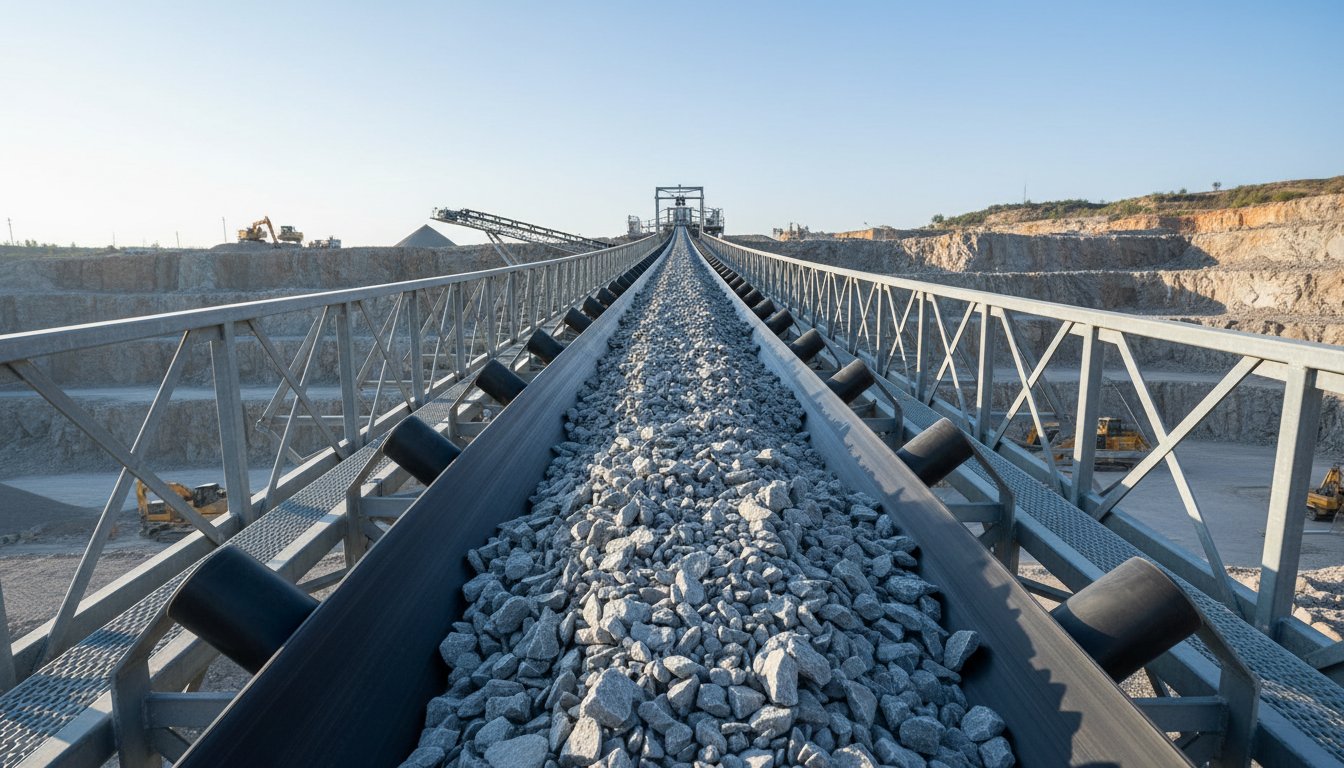
Transport is the most visible stage. You likely rely on belt conveyors or gravity rollers to move products. Whether you're moving a 50 lb (22.6 kg) box or a 2,000 lb (907 kg) pallet, the goal is stability. The right belt choice prevents slippage and preserves your inventory.
Positioning comes next. This ensures parts sit at the right angle for your workers or robots. Finally, unit load formation gathers items into a single mass. Efficient systems handle these three pillars without manual intervention. This reduces the risk of the 1,300 forklift accidents reported annually. Proper unit load formation also maximizes your warehouse space by allowing for taller, safer stacks.
The Hidden Cost of Downtime
A single failed bearing can stop a $10 million line. We know the stress of watching the clock while a machine sits idle. Rapid part replacement is the only cure for these losses. You can't afford to wait for an authorized dealer to check their limited stock. You need a partner who can pull from thousands of brands immediately.
In 2026, OSHA increased its focus on high-energy hazards. This means your repairs must be both fast and compliant. Delayed parts don't just cost time; they cost safety. With the average US import duty at 11.1%, sourcing through an expert partner is vital. We use our 75 years of experience to navigate these fees and find the exact part you need. We don't care about brand labels. We care about your uptime.
The Anatomy of Efficiency: Critical System Components
Your system is only as strong as its weakest link. We've seen how high-wear parts can compromise an entire operation. In industrial material handling, efficiency depends on the synergy between your motor and your belt. You need hardware that meets heavy-duty specifications. This ensures your line survives the grit of mining or the intense heat of industrial baking.
We focus on the components that take the most abuse. These are the items that usually cause your 3:00 AM headaches. By selecting robust hardware, you extend the life of your entire system. We've helped customers find these specific solutions for 75 years. We don't just sell parts; we help you build a more resilient floor.
Conveyor Belting and Elevator Buckets
Moving bulk materials vertically requires specialized gear. We often recommend elevator buckets for these high-stress applications. They allow you to move materials like grain or aggregate efficiently in tight spaces. For horizontal movement, heavy-duty conveyor belting is essential. These belts must withstand sharp edges and heavy loads of 2,000 lbs (907 kg) or more.
We also provide specialized PVC and solid woven belting. These are perfect for food processing or chemical environments where hygiene is vital. Every belt we source is tested for durability and performance. We want your equipment to run smoothly for years, not just months.
Motors, Gearing, and Power Transmission
Power transmission is the heart of mechanical movement. According to the Material Handling Institute, understanding hardware fundamentals is key to system longevity. You must choose between AC and DC motors based on your torque needs. DC motors offer precise speed control. AC motors are often preferred for their durability in harsh environments.
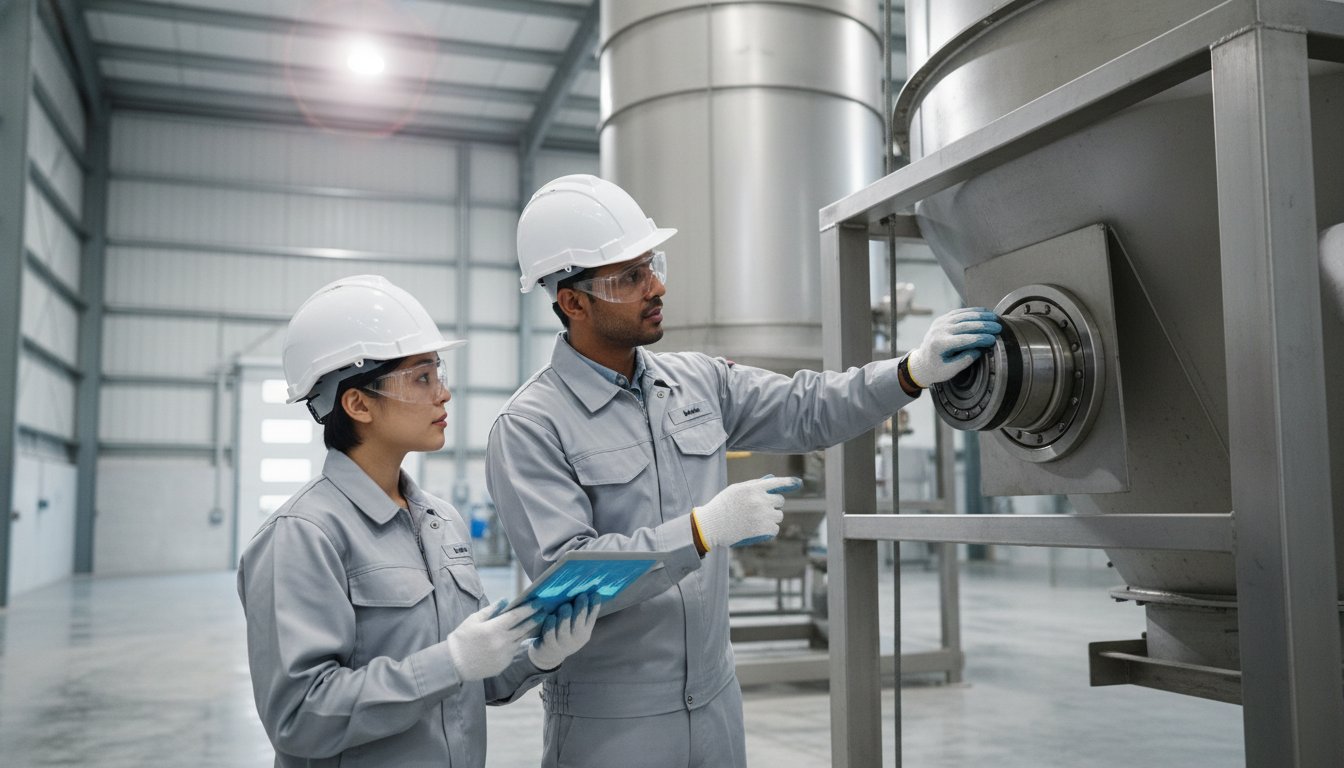
We use gearing products and speed reducers to manage that power. These components optimize torque and prevent system strain. High-quality sprockets and chains prevent the jerky movements that damage fragile goods. If you're unsure which motor fits your current setup, our team can help you audit your power needs . We look at the technical synergy of your industrial material handling setup to find the right match.
Independence by Design: A Better Sourcing Model
We believe your operations shouldn't be limited by a distributor's contract. Most buyers fall into the "Authorized Dealer Trap." These distributors only sell what their brand allows. If that brand is out of stock, your line stops. We built our "Independence by Design" philosophy to solve this. It gives you access to thousands of brands across the industrial material handling sector.
Our 75-year history is built on solving complex sourcing problems. We don't just look at what's on the shelf. We find the exact component that matches your technical specs. This freedom allows us to source everything from high-torque motors to specialized solid woven PVC conveyor belting without bias. We focus on functionality and robustness above all else.
Why Brand Flexibility Matters
Restricted distributors often push the parts they have in stock. We prioritize the "perfect fit" part instead. When we source independently, we can compare brands across the globe. This creates a competitive bidding environment. You get better quality and often better lead times.
We've seen this flexibility reduce downtime by over 25% in complex logistics hubs. If a specific 2-inch (50.8 mm) roller isn't available from one maker, we find its equivalent elsewhere. You aren't locked into one ecosystem. This approach saves you from the 11.1% average tariff sting by finding the most cost-effective shipping routes for your industrial material handling needs.
Personalized Service for the Mid-Market
E-commerce giants rely on automated systems. They often ignore small orders or custom requests. We take a different path. We offer a consultative approach for mid-market customers. You get to talk to a human expert who understands your technical workflow.
We value small orders and custom sourcing. Whether you need one specialized bearing or a complete set of pallet jacks, we treat your order with professional care. We don't hide behind chatbots or automated emails. We provide real solutions for real people, especially those managing cross-border operations in Latin America. This personal touch is why our clients stay with us for decades.
Navigating Global Logistics and International Export
Exporting heavy industrial equipment isn't just about moving a box. It's about data, timing, and trust. We've spent 75 years perfecting this process. Shipping a 1,000 lb (453.6 kg) motor to Latin America requires more than a carrier. It needs an expert who understands global industrial material handling logistics.
We bridge the gap between US manufacturers and international users. Many local distributors can't handle the paperwork. They stop at the border. We don't. We provide both imperial and metric measurements for every part. Whether you need a 2-inch (50.8 mm) sprocket or a 10-meter (32.8-foot) belt, we ensure the specs are clear.
Customs documentation is a critical part of our sale. As of February 24, 2026, most imports face a 10% global surcharge. The average effective US import duty now sits at 11.1%. We navigate these fees so you don't have to. We ensure your shipment clears customs without expensive delays.
Expertise in International Documentation
Seamless clearance depends on accurate paperwork. We handle all the essential documents for you. This includes commercial invoices, certificates of origin, and detailed packing lists. We also specialize in "blind shipping" and consolidated loads to save you money.
-
Consolidated Loads: We combine smaller orders to reduce your shipping costs.
-
Risk Reduction: Our deep knowledge of international trade laws prevents legal snags.
Global Reach, Local Understanding
Our 75 years of experience give us an edge. We manage the logistics from our offices in Tennessee for worldwide delivery. You get the reliability of a US partner with the reach of a global firm.
We treat every international transaction with professional sobriety. We focus on functionality and long-term success. If you're ready to expand your operations across borders, contact our export experts today . We'll help you navigate the complexities of global trade.
Building a Resilient Material Handling Strategy
We want you to stop chasing fires. A reactive repair culture kills your margins and exhausts your team. By November 20, 2026, you must update your written HazCom programs to meet new OSHA standards. Your industrial material handling strategy needs to account for these regulatory shifts while keeping your lines moving. We've seen that the most successful facilities plan their parts inventory six months in advance.
Start by conducting a thorough parts audit. Identify every component that has failed in your facility over the last 24 months. Look for patterns in your bearings, rollers, and belts. We often find that specific high-wear zones need more robust hardware than the original equipment manufacturer provided. Replacing a standard 50 lb (22.7 kg) roller with a heavy-duty alternative can double your uptime.
Steps to Optimize Your Sourcing
Identify the critical failure points in your current line. These are the "single points of failure" where one break stops everything. Evaluate multiple brand options for these components rather than relying on one source. This prevents you from being held hostage by a single manufacturer's lead times or backlogs.
You can leverage our online catalogs to quickly identify part numbers. This digital tool allows for rapid identification of technical specifications across thousands of brands. It's designed for the technician who needs an answer in minutes, not days. Having this data at your fingertips turns a crisis into a routine maintenance task.
The Jealco Advantage: Custom Solutions
We offer more than just a parts list. Our "independence by design" model means we find the part that actually works for your specific motor or conveyor. We don't have to push one brand because of a distributor agreement. We've spent 75 years building a network that prioritizes your operational success over brand loyalty.
We value every order, whether it's for a single specialized belt or a full system upgrade. Our consultative approach helps mid-market customers who are tired of automated chatbots. You get to talk to a human expert who understands the technical sobriety of your workflow. We're ready to help you navigate the 10% global surcharge and complex export documentation for your next project.
Don't let a restricted supply chain limit your growth. We're here to provide the personalized industrial support you need to stay competitive. Contact our team today to start your consultation. Let's build a more resilient strategy together.
Optimize Your Operations Today
Your facility's success depends on more than just moving parts. It requires a strategy that ignores brand limitations and masters global trade. We've shown how brand independence and proactive audits stop the cycle of reactive repairs. Navigating the 11.1% average US import duty and the February 24, 2026, surcharge is easier with an expert partner.
We bring 75 years of industrial experience to your floor. Our team provides access to thousands of global brands and specialized international export expertise. Whether you need a single component or a full system audit, we're here to help. Don't let restricted distributors dictate your uptime.
Take control of your industrial material handling strategy today. We offer the personalized service that automated systems can't match. We're ready to help you build a more robust and efficient operation. Your production line deserves the reliability of an independent partner.
**Get a personalized quote for your material handling needs today **.
Frequently Asked Questions
What is the difference between an authorized distributor and an independent one?
Authorized distributors have contracts that limit them to specific brands. We operate as independent agents, which means we source from thousands of brands without restrictions. This allows us to find the best technical fit for your needs rather than just what a contract allows. Our "independence by design" model keeps your lines moving when one brand is out of stock.
Can Jealco source parts for discontinued conveyor systems?
Yes, we specialize in finding functional matches for legacy machinery. Our 75-year history gives us deep knowledge of older industrial material handling setups. We use our global network to find equivalents that meet or exceed the original specs. You don't have to replace an entire system just because one part is discontinued.
How do you handle international shipping and customs for heavy machinery?
We manage the entire export process from our offices and with trusted shipping partners throughout the world to ensure your shipment clears borders without delays. We also offer consolidated loads to help you save on shipping costs.
Do you provide both metric and imperial measurements for international orders?
We provide both measurement systems for every part we sell. Whether you need a 1-inch (25.4 mm) sprocket or a 5-meter (16.4-foot) belt, we verify the specs. This precision prevents installation errors and ensures your new parts fit perfectly. We know that a tiny measurement error can stop an entire production line.
What industries do your material handling components serve?
We primarily serve food processing, mining, aggregate, and large-scale manufacturing. Our components handle everything from delicate bakery goods to 2,000 lb (907.2 kg) pallet loads. We focus on industrial material handling in high-wear environments where durability is vital. We source hardware that survives heat, grit, and 24/7 operation.
How does Jealco support mid-market companies with small order requirements?
We value small orders and provide the same expert consultation as we do for large projects. You won't have to deal with automated chatbots or rigid e-commerce systems. You'll talk to a human expert who understands your specific technical workflow. We take a flexible approach to help mid-market firms grow without high minimum order barriers.
What are the benefits of using gearmotors over standard industrial motors?
Gearmotors combine a motor and a speed reducer into one integrated unit. This design saves space and provides high torque at lower speeds. Standard motors often require separate gearing, which adds more failure points to your system. We find that gearmotors offer better efficiency for heavy-duty conveyor applications.
How do I know which conveyor belt material is right for my application?
Your choice depends on your product's weight, temperature, and chemical exposure. We offer specialized PVC for food safety and heavy-duty rubber for mining. We'll help you audit your environment to find a material that won't stretch or degrade. Choosing the right belt material can reduce your maintenance costs by 30% over two years.